Santhini Govindan

Published works

Books, stories & poetry

More than 50 titles published since 1992, across picture books, short stories, historical fiction, poetry, anthologies, and educational writing.

Read HereFolk talesFeatured in TextbooksPoetryShape PoemsWordplayMagazine ContributionsMythologyStories on the Web
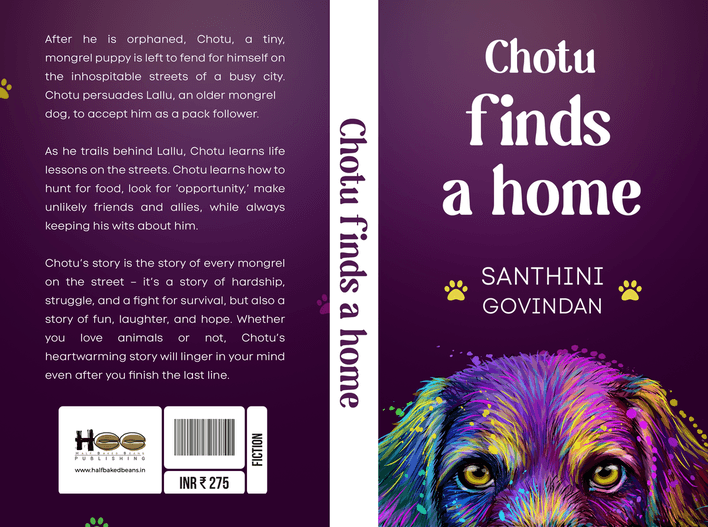
Chotu Finds a Home

Chotu Finds a Home

HalfBakedBeans

2022

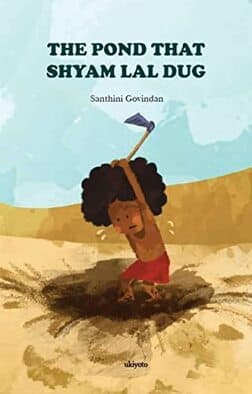
The Pond that Shyam Lal Dug

The Pond that Shyam Lal Dug

Ukiyoto Publishing

2023

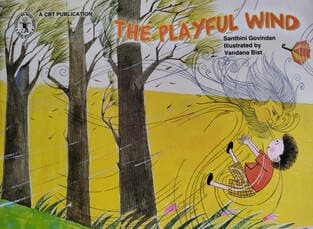
The Playful Wind

The Playful Wind

Children's Book Trust, New Delhi

2016

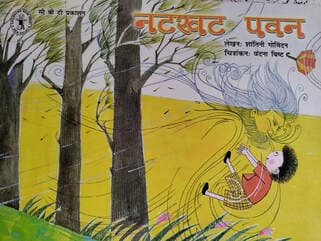
नटखट पवन

नटखट पवन

Children's Book Trust, New Delhi

2018

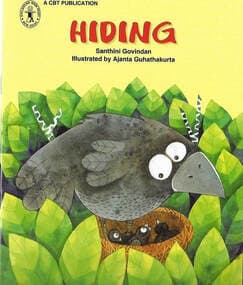
Hiding

Hiding

Children's Book Trust, New Delhi

2018

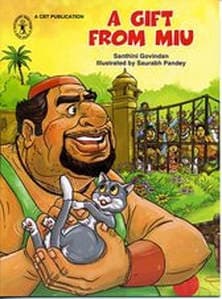
A Gift From Miu

A Gift From Miu

Children's Book Trust, New Delhi

2015

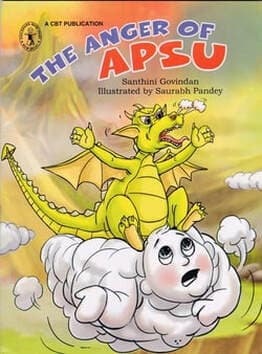
The Anger of Apsu

The Anger of Apsu

Children's Book Trust, New Delhi

2012

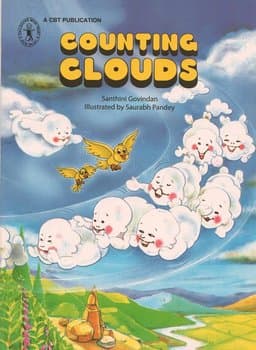
Counting Clouds

Counting Clouds

Children's Book Trust, New Delhi

2005

Where Does the Wind Live?

Where Does the Wind Live?

National Book Trust, New Delhi

2001

Cuddly Tales

Cuddly Tales

Kids Animation India, Mumbai

2009

The Angel Who Stammered

The Angel Who Stammered

Rupa & Company

2003

The Giant Who Looked For His Temper

The Giant Who Looked For His Temper

Scholastic India Publishers

2001

A Present for Mrs. Kangaroo’s Pouch

A Present for Mrs. Kangaroo’s Pouch

Children's Book Trust, New Delhi

1997

A Present for Mrs. Kangaroo’s Pouch — Urdu

A Present for Mrs. Kangaroo’s Pouch — Urdu

National Council for the Promotion of the Urdu Language

2021

Wally Grows Up

Wally Grows Up

Children's Book Trust, New Delhi

1994

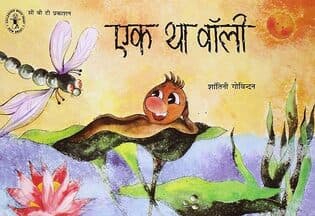
एक था वॉली (Ek Tha Wally)

एक था वॉली (Ek Tha Wally)

Children's Book Trust, New Delhi

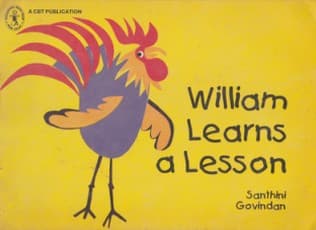
William Learns A Lesson

William Learns A Lesson

Children's Book Trust, New Delhi

1997

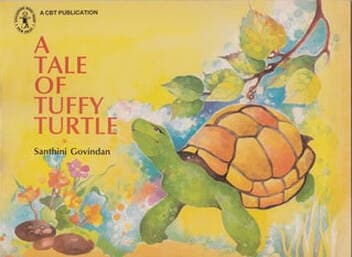
A Tale of Tuffy Turtle

A Tale of Tuffy Turtle

Children's Book Trust, New Delhi

1992

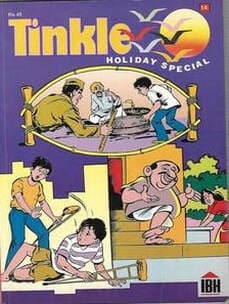
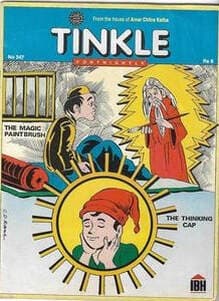
Tinkle Holiday Special

Tinkle Holiday Special

India Book House, Mumbai

Tinkle No. 341

Tinkle No. 341

India Book House, Mumbai

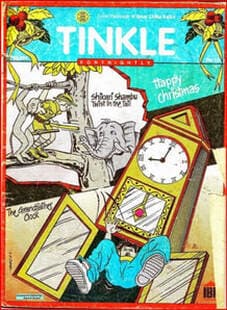
Tinkle — Christmas Issue

Tinkle — Christmas Issue

India Book House, Mumbai

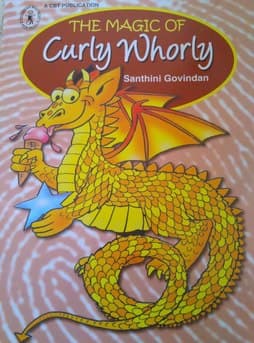
The Magic of Curly Whorly

The Magic of Curly Whorly

Children's Book Trust, New Delhi

2018

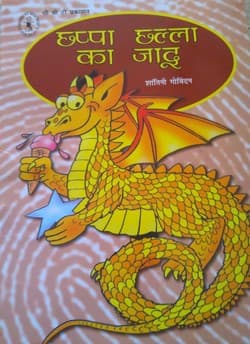
छप्पा छल्ला का जादू

छप्पा छल्ला का जादू

Children's Book Trust, New Delhi

2018

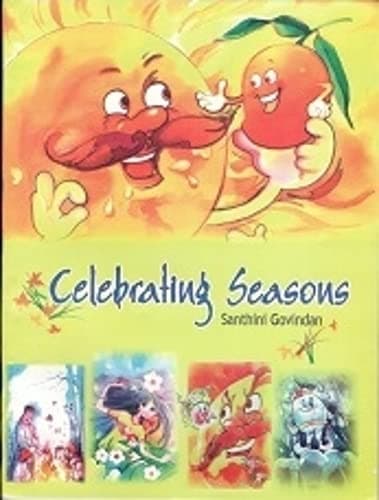
Celebrating Seasons

Celebrating Seasons

Publications Division, Ministry of Information and Broadcasting, Government of India

2009

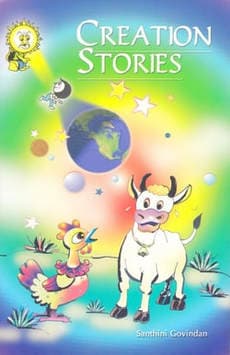
Creation Stories

Creation Stories

Publications Division, Ministry of Information & Broadcasting, Government of India

2007

Just Imagine — Stories and Poems

Just Imagine — Stories and Poems

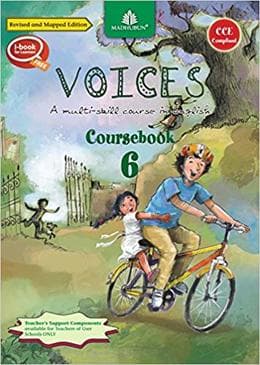
Vikas Publishers / Madhuban Educational Books, New Delhi

2001

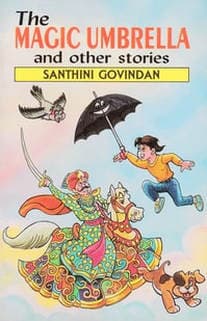
The Magic Umbrella and Other Stories

The Magic Umbrella and Other Stories

Prism Books Limited, Bangalore

1999

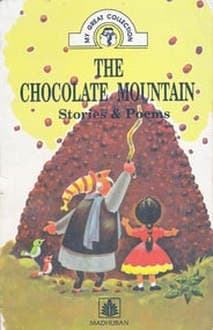
Chocolate Mountain, Stories and Poems

Chocolate Mountain, Stories and Poems

Vikas Publishers / Madhuban Educational Books, New Delhi

1997

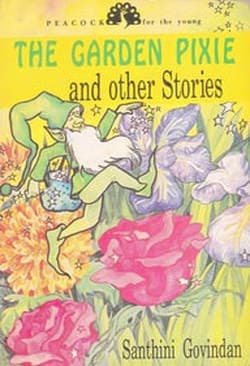
The Garden Pixie and Other Stories

The Garden Pixie and Other Stories

HarperCollins Publishers India (Indus Peacock imprint)

1994

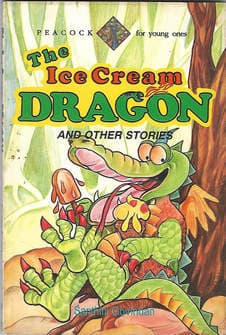
The Ice Cream Dragon & Other Stories

The Ice Cream Dragon & Other Stories

HarperCollins Publishers India (Indus Peacock imprint)

1993

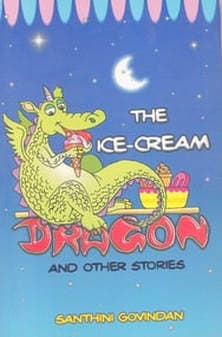
The Ice-Cream Dragon & Other Stories — Rupa Reprint

The Ice-Cream Dragon & Other Stories — Rupa Reprint

Rupa and Company, New Delhi

2003

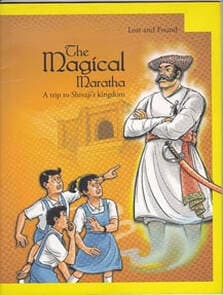
Lost and Found: The Magical Maratha

Lost and Found: The Magical Maratha

IL&FS Educational & Technology Services

2005

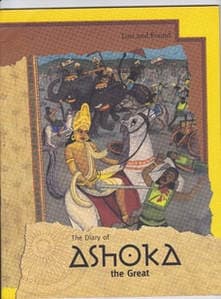
Lost and Found: The Diary of Ashoka the Great

Lost and Found: The Diary of Ashoka the Great

IL&FS Educational and Technology Services

2005

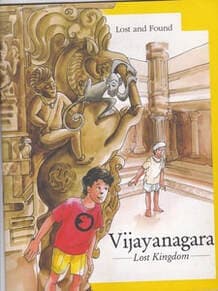
Lost and Found: Vijayanagara Lost Kingdoms

Lost and Found: Vijayanagara Lost Kingdoms

IL&FS Education and Technology Services

2004

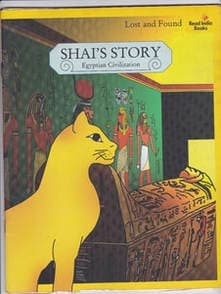
Shai's Story: Egyptian Civilization

Shai's Story: Egyptian Civilization

IL&FS Education and Technology Services Limited

2003

It Happened 5000 Years Ago… The Indus Valley Civilization

It Happened 5000 Years Ago… The Indus Valley Civilization

IL&FS Education and Technology Services Limited

2003

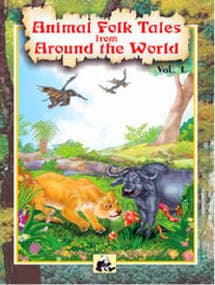
Animal Folk Tales From Around the World, Vol. I

Animal Folk Tales From Around the World, Vol. I

Panda / Unicorn Books / Pustak Mahal Publishers, New Delhi

2004

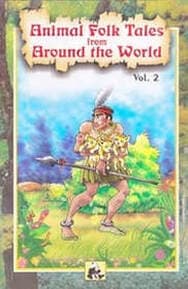
Animal Folk Tales From Around the World, Vol. III

Animal Folk Tales From Around the World, Vol. III

Panda / Unicorn Books / Pustak Mahal Publishers, New Delhi

2004

Animal Folk Tales From Around the World — Individual Picture Books

Animal Folk Tales From Around the World — Individual Picture Books

Unicorn Books, New Delhi

2011

Animal Tales From Around the World II

Animal Tales From Around the World II

Panda Books / Pustak Mahal Publishers, New Delhi

2010

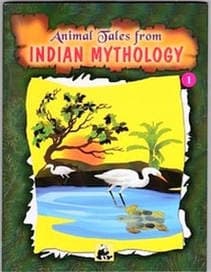
Animal Tales From Indian Mythology I

Animal Tales From Indian Mythology I

Panda Books / Pustak Mahal Publishers, New Delhi

2010

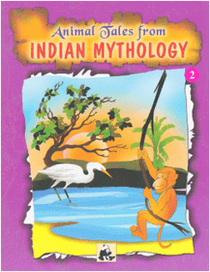
Animal Tales From Indian Mythology II

Animal Tales From Indian Mythology II

Panda Books / Pustak Mahal Publishers, New Delhi

2010

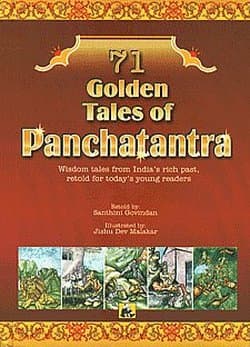
71 Golden Tales of Panchatantra

71 Golden Tales of Panchatantra

Unicorn Books Pvt. Ltd. (Panda imprint)

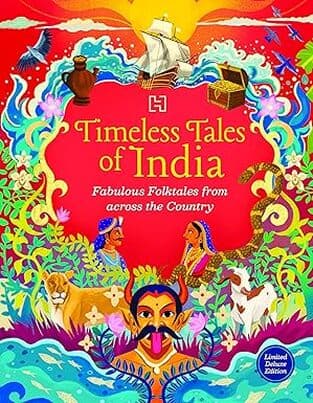
Timeless Tales of India: Fabulous Folktales from across the Country

Timeless Tales of India: Fabulous Folktales from across the Country

Hachette India in arrangement with AWIC India

2025

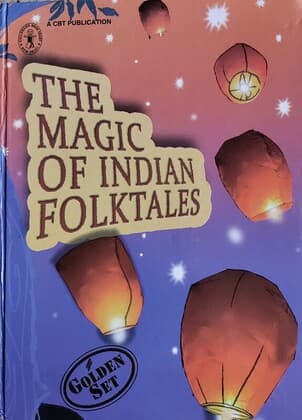
The Magic of Indian Folktales

The Magic of Indian Folktales

Children's Book Trust, New Delhi

2025

Hug Yourself: Body Positivity and Empowerment Stories for Teenagers

Hug Yourself: Body Positivity and Empowerment Stories for Teenagers

Penguin Random House India

Padma Bharatis: Ordinary Indians, Extraordinary Triumphs

Padma Bharatis: Ordinary Indians, Extraordinary Triumphs

BlueOne Ink Pvt. Ltd. for INDICA

2024

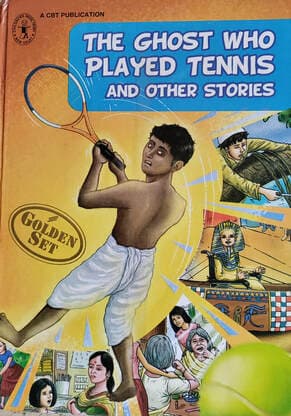
The Ghost Who Played Tennis

The Ghost Who Played Tennis

Children's Book Trust, New Delhi

2022

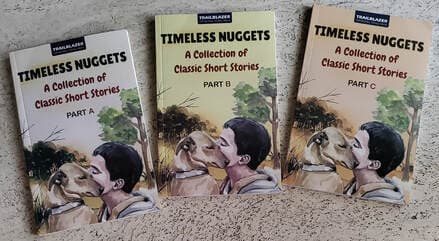
Timeless Nuggets

Timeless Nuggets

Unicorn Books Pvt. Ltd., New Delhi

2023

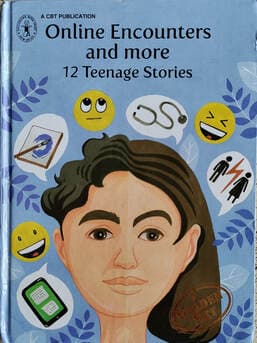
Online Encounters and More: 12 Teenage Stories

Online Encounters and More: 12 Teenage Stories

Children's Book Trust, New Delhi

2021

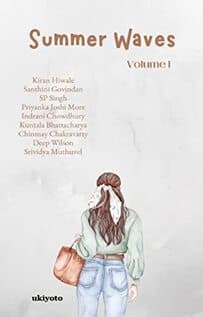
Summer Waves

Summer Waves

Ukiyoto Publishing

2022

Purrfect Surprise

Purrfect Surprise

Writefluence

2022

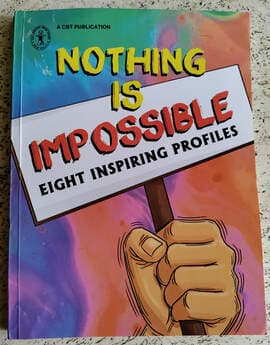
Nothing is Impossible: Eight Inspiring Profiles

Nothing is Impossible: Eight Inspiring Profiles

Children's Book Trust, New Delhi

2020

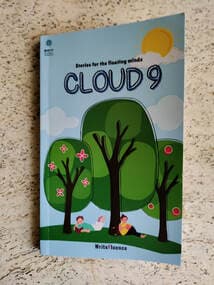
Cloud 9

Cloud 9

Writefluence

2021

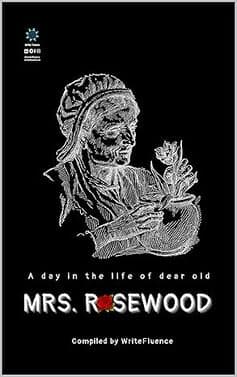
Mrs. Rosewood

Mrs. Rosewood

Writefluence

2021

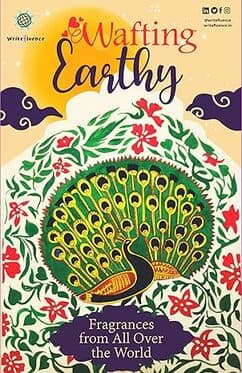
Wafting Earthy: Fragrances from all over the World

Wafting Earthy: Fragrances from all over the World

Writefluence

2021

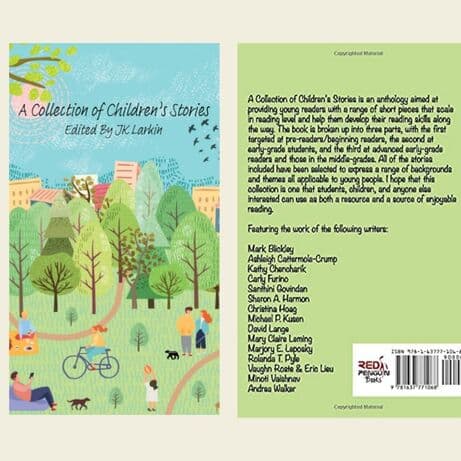
A Collection of Children's Stories

A Collection of Children's Stories

Red Penguin Books, New York

2021

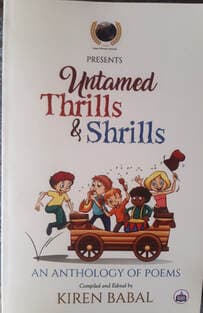
Untamed Thrills & Shrills

Untamed Thrills & Shrills

Authorspress, New Delhi

2019

No Mountain is High Enough

No Mountain is High Enough

Children's Book Trust, New Delhi

2015

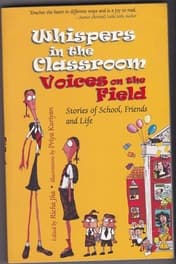
Whispers in the Classroom, Voices on the Field

Whispers in the Classroom, Voices on the Field

Wisdom Tree Publishers, India

2012

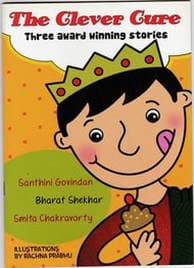
The Clever Cure: Three Award Winning Stories

The Clever Cure: Three Award Winning Stories

Unisun Publications, Bangalore

2010

Forever Young: A Collector's Edition

Forever Young: A Collector's Edition

The Hindu — Young World supplement

2010

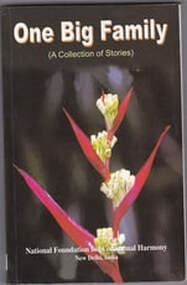
One Big Family

One Big Family

National Foundation for Communal Harmony, Government of India

2010

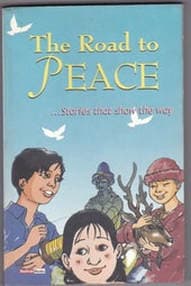
The Road to Peace… Stories that Show the Way

The Road to Peace… Stories that Show the Way

Radical Books Pvt. Ltd., New Delhi

2008

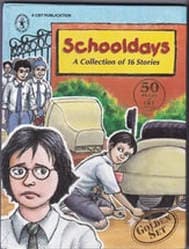
Schooldays

Schooldays

Children's Book Trust, New Delhi

2007

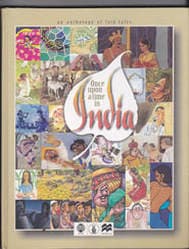
Once Upon A Time in India

Once Upon A Time in India

Macmillan India, published jointly by AWIC and ICCR, New Delhi

2004

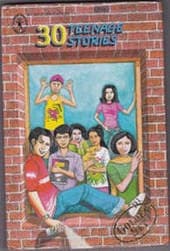
30 Teenage Stories

30 Teenage Stories

Children's Book Trust, New Delhi

2003

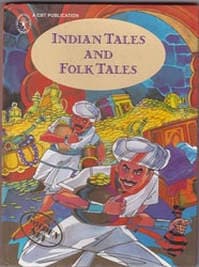
Indian Tales & Folk Tales

Indian Tales & Folk Tales

Children's Book Trust, New Delhi

2003

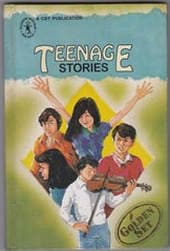
Teenage Stories

Teenage Stories

Children's Book Trust, New Delhi

1999

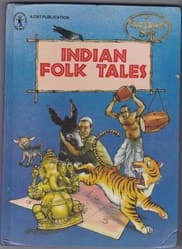
Indian Folk Tales

Indian Folk Tales

Children's Book Trust, New Delhi

1999

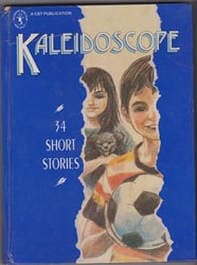
Kaleidoscope

Kaleidoscope

Children's Book Trust, New Delhi

1996

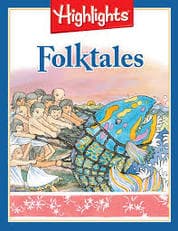
Highlights for Children — Folktales Anthology

Highlights for Children — Folktales Anthology

Highlights for Children, USA

Chapter books

Chapter Books

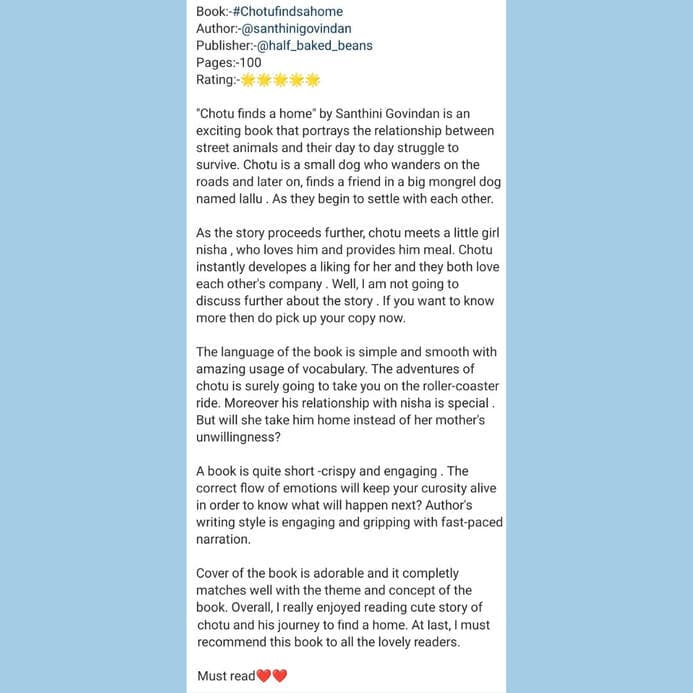
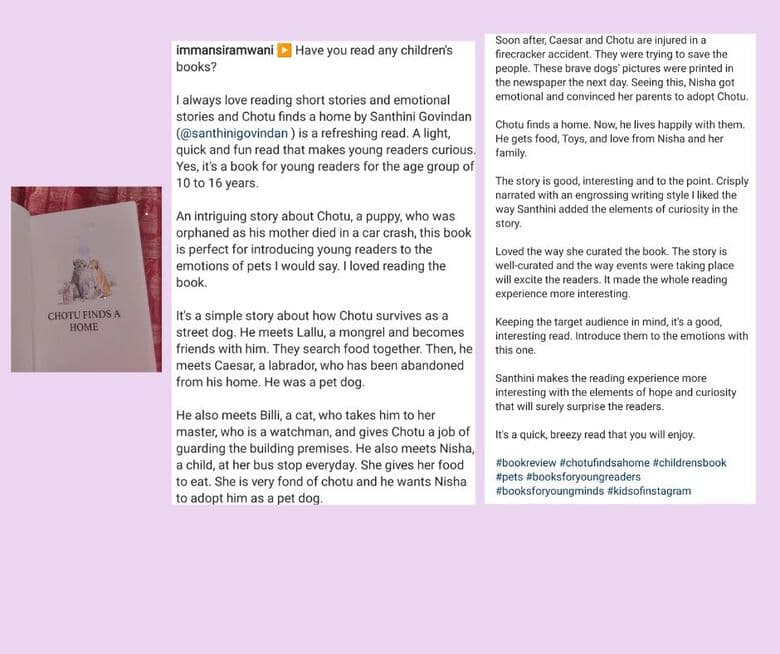
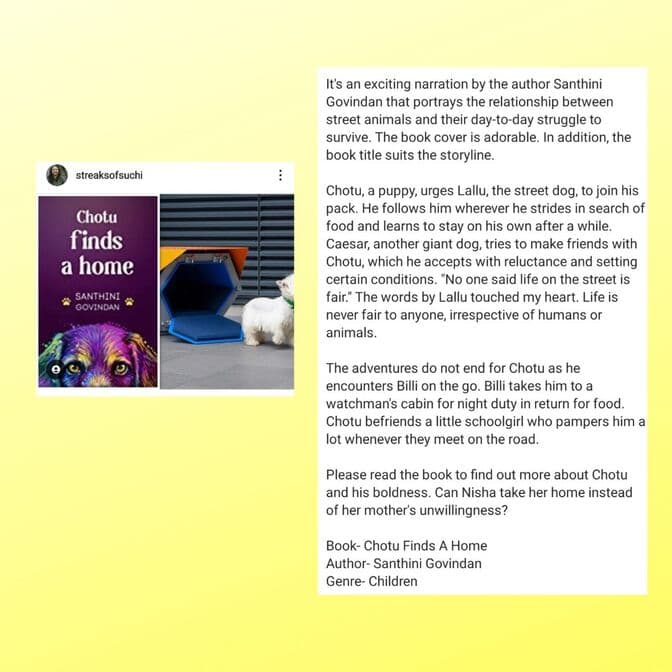
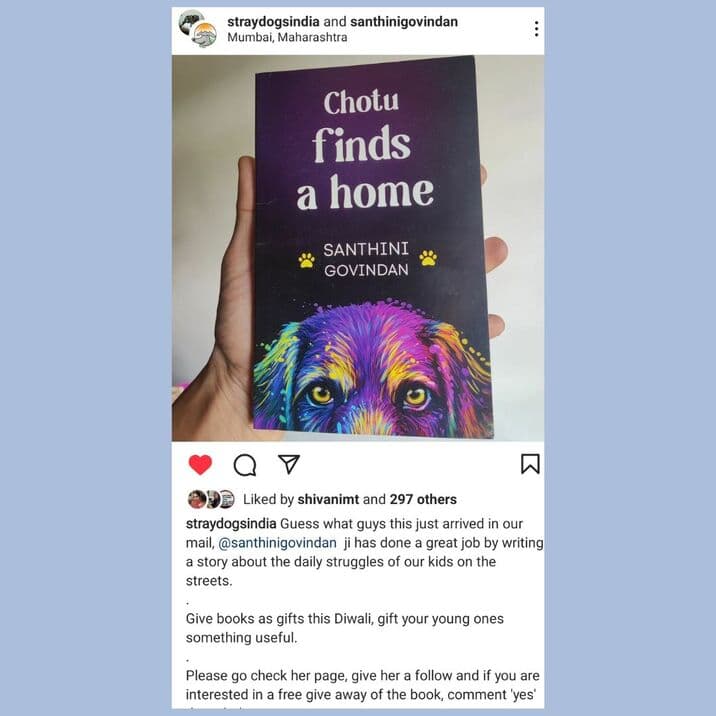
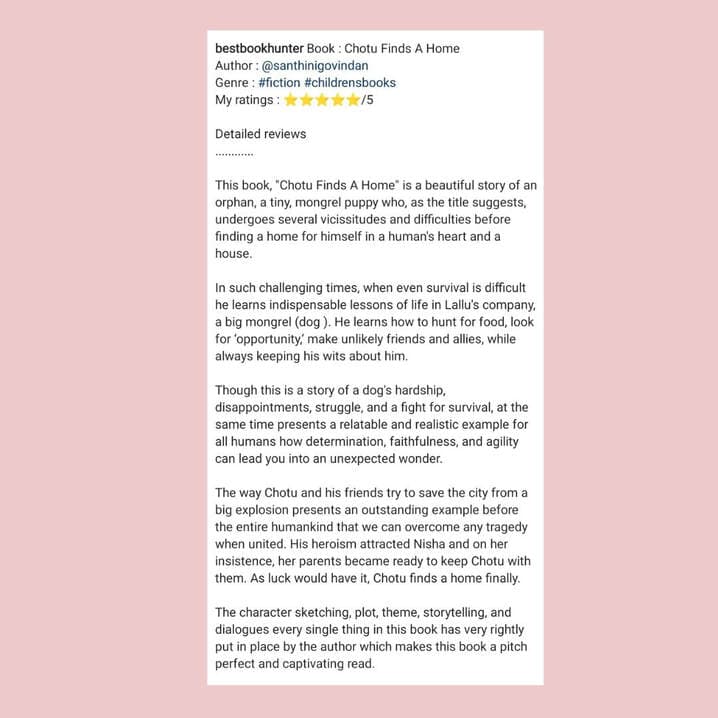
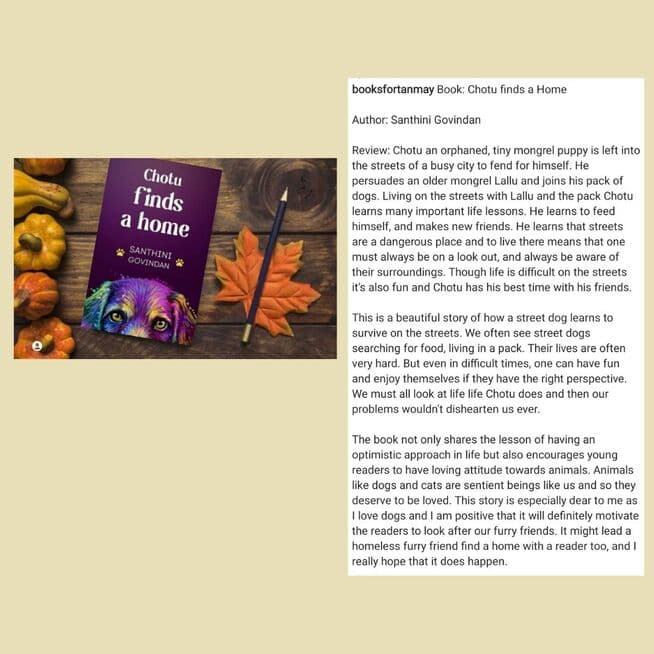
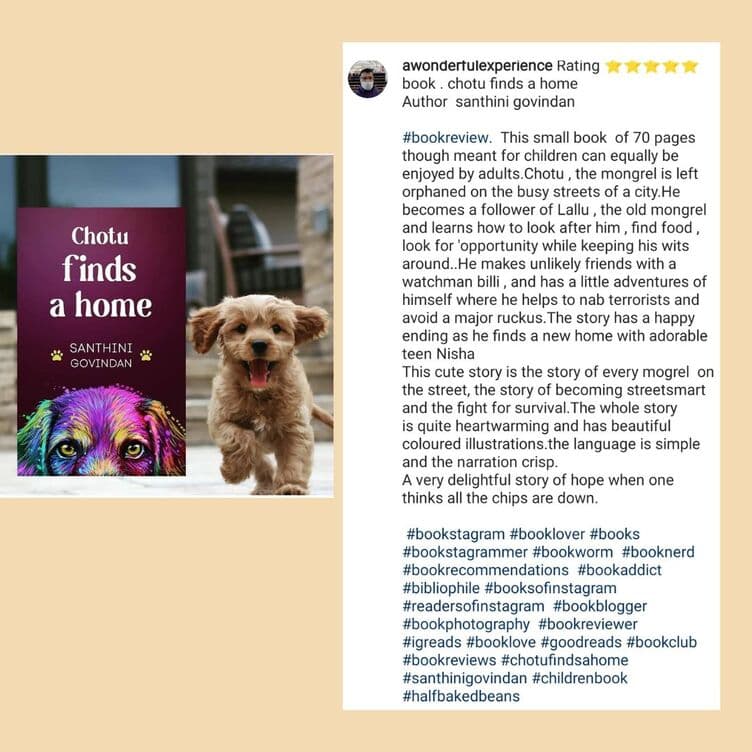
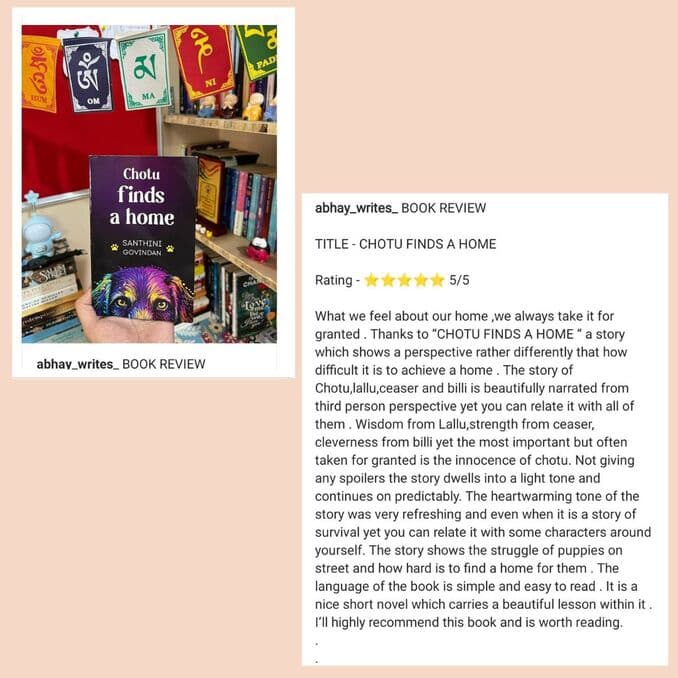
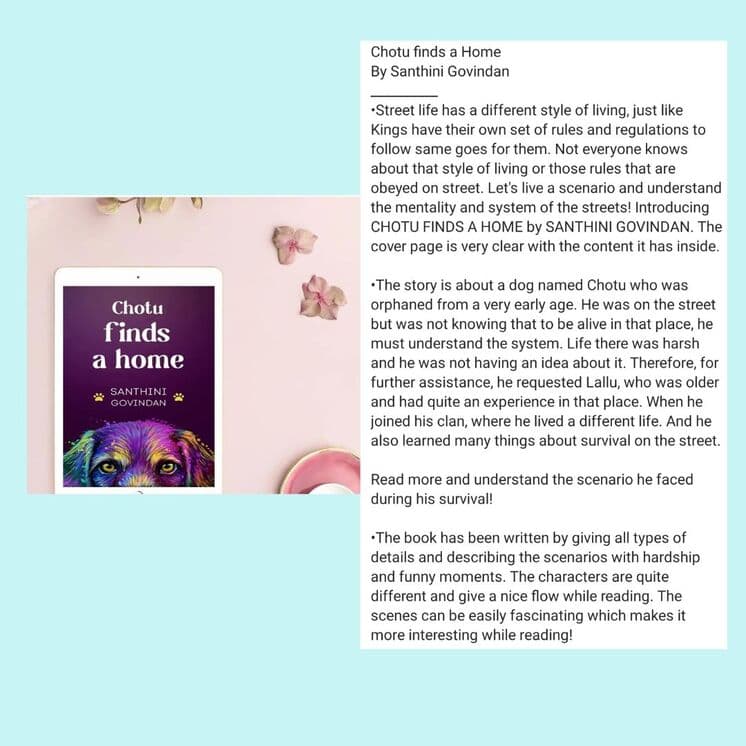
My chapter book, 'Chotu Finds a Home,' won first place in the PitchYourBook 2021 competition conducted by the HalfBakedBeans publishing platform. 'Chotu Finds a Home' is the story of a mongrel puppy orphaned on the streets of a busy, inhospitable city. As the little puppy struggles to survive, he learns tough life lessons while coping with the daily uncertainties that stray dogs face. Chotu's story is the story of every stray mongrel on the streets, and it hopes to help readers develop empathy for stray dogs like little Chotu. Published by HalfBakedBeans (2022).

Chotu Finds a Home cover

Reviews, Features and Reader Responses

16 gallery images from the Chapter Books archive.

Chapter books review and feature image

Poetry

Shape Poems

Poems arranged in visual shapes that match each theme.

THE LONELY UMBRELLA

THE LONELY UMBRELLA

For
                                                                                                                        A long time,
                                                                                                             The folded umbrella just,
                                                                                                        Lay on a shelf, gathering dust.
                                                                                                It was forgotten - and quite out of sight.
                                                                                      For months, the umbrella did not even see daylight.
                                                                               But the umbrella did not grumble, or utter a single moan,
                                                                           It sat patiently, waiting, in a large,  dark  cupboard on its own.
                                                                       Then, one day, as it lay napping, the lonely umbrella heard a sound;
                                                                    The umbrella was so excited that its little heart began to race and pound
                                                               As it heard the pitter-patter of raindrops falling upon a nearby window pane
                                                           It clapped and shouted, "Hooray! Hooray! The monsoons are here once again!"
                                                                                                                       The umbrella was
                                                                                                                         As happy as can
                                                                                                                               be. It said
                                                                                                                                     "Now,
                                                                                                                                        my
                                                                                                                                         o
                                                                                                                                         w
                                                                                                                                         n
                                                                                                                                         e
                                                                                                                                         r
                                                                                                                                         s
                                                                                                                                        will
                                                                                                                                            surely                me!
                                                                                                                                                  remember

ON THE SLIDE

ON THE SLIDE

the top.  Then I laugh and shout,

                                right to                                            and stretch

                            I get                                                             my hands

                       till                                                                           out. I am

                    step,                                                                              ready for the

                  by                                                                                         ride. Whee!

               step                                                                                              How I slip,

            up,                                                                                                        And slide,

         up,                                                                                                                and glide,

      up,                                                                                                                       till I get to

    up,                                                                                                                             the bottom

  climb                                                                                                                                of the SLIDE!
I

MYSTERIOUS MR. MOON

MYSTERIOUS MR. MOON

Oh
                                                                                       dear Mr.
                                                                                Moon, why
                                                                       do you shine
                                                                  only during
                                                            the dark night?
                                                      What do you do
                                                  When you are
                                             out of our sight?
                                        Do you just nap,
                                     Play with stars,
                                Or fly to planets
                              In galaxies afar?
                          Are you afraid of
                       The dark night sky?
                      Do you like to be
                     Alone, up so high?
                    Do you talk to the
                    Clouds so white,
                    Or birds winging
                      Along in flight?
                        Sometimes you
                          Are round, and
                            Look like a ball.
                              But sometimes,
                                  You're so skinny,
                                          It's so hard to
                                              See you at all!
                                                 Are you playing
                                                     Hide and seek with
                                                              Me? Is that why,
                                                                 Mr. Moon, you are
                                                                         Sometimes, just
                                                                                  So very hard
                                                                                                  to see?

THE KITE'S FLIGHT

THE KITE'S FLIGHT

It
                                                                     soars.
                                                                 Suddenly,
                                                             Up so very high.
                                                       Reaching for the fleecy
                                                  White clouds dotting the sky.
                                             It flies past the rooftops and trees,
                                             As it frolics so gaily with the breeze.
                                                 A little bird asks the paper kite,
                                                     "I'm curious about your flight.
                                                          Why do you rush so?
                                                             Don't you know,
                                                                 It's better,
                                                                     To take
                                                                         It
                                                                            slow?"
                                                                                   The
                                                                                       kite replied,
                                                                                                        "I can't do that,
                                                                                                                               dear chap.
                                                                                                                                              Because,you see,
                                                                                                                                                                        I don't know,
                                                                                                                                                                                           when my
                                                                                                                                                                                                         string
                                                                                                                                                                                                                 will snap!"

LITTLE BOAT AT SEA

LITTLE BOAT AT SEA

The
                                                                                  little boat
                                                                  was        excited to go
                                                              out to       sea for the first
                                                           time.          "Push me!" He cried
                                                      To the             gentle sea. "Then, your
                                                  frothy                 white waves I will climb."
                                             "Wait                       patiently," said the sea, "for
                                         the                              wind to come by. "Without his help,

                                                   I just can't push you, my dear, No matter
                                                     how hard my frothy white waves try!
                                                        When the wind arrives, you'll have
                                                              Such fun - he'll push you over
                                                                  My waves - one by one!

Poetry

Wordplay: Poetry Writing Series (RobinAge)

A series on poetry writing that appeared in RobinAge in 2022/23.

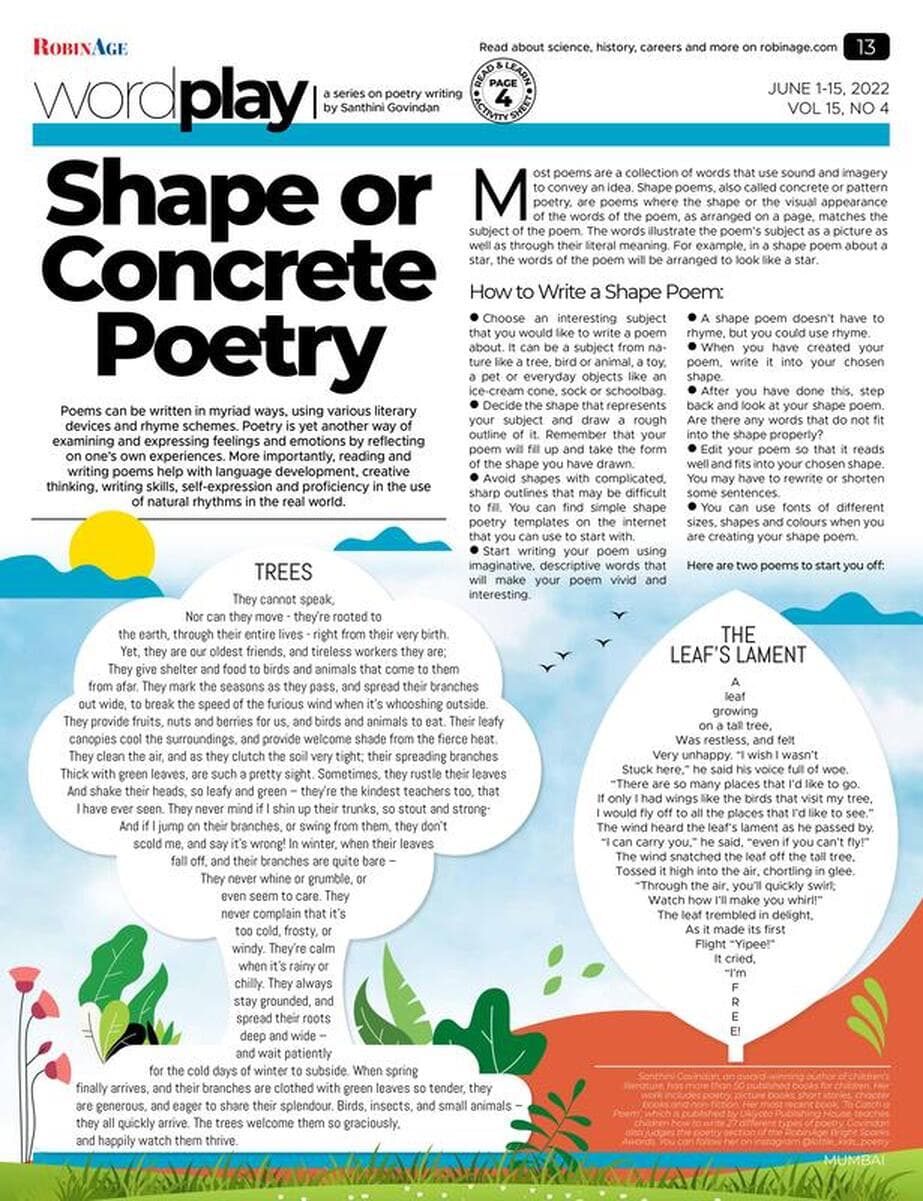
Shape or Concrete Poetry

Shape or Concrete Poetry

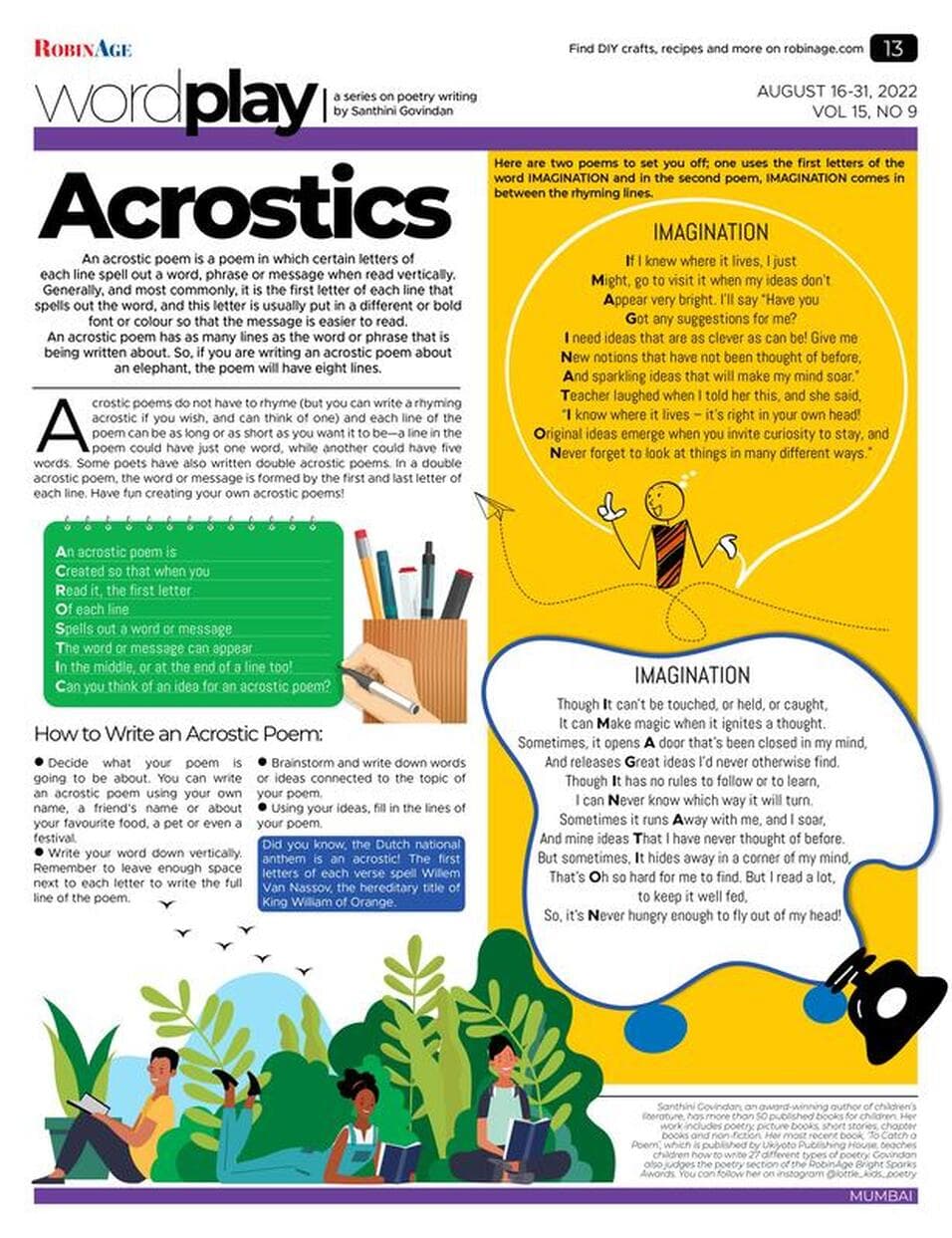
Acrostics

Acrostics

Diamante Poems

Diamante Poems

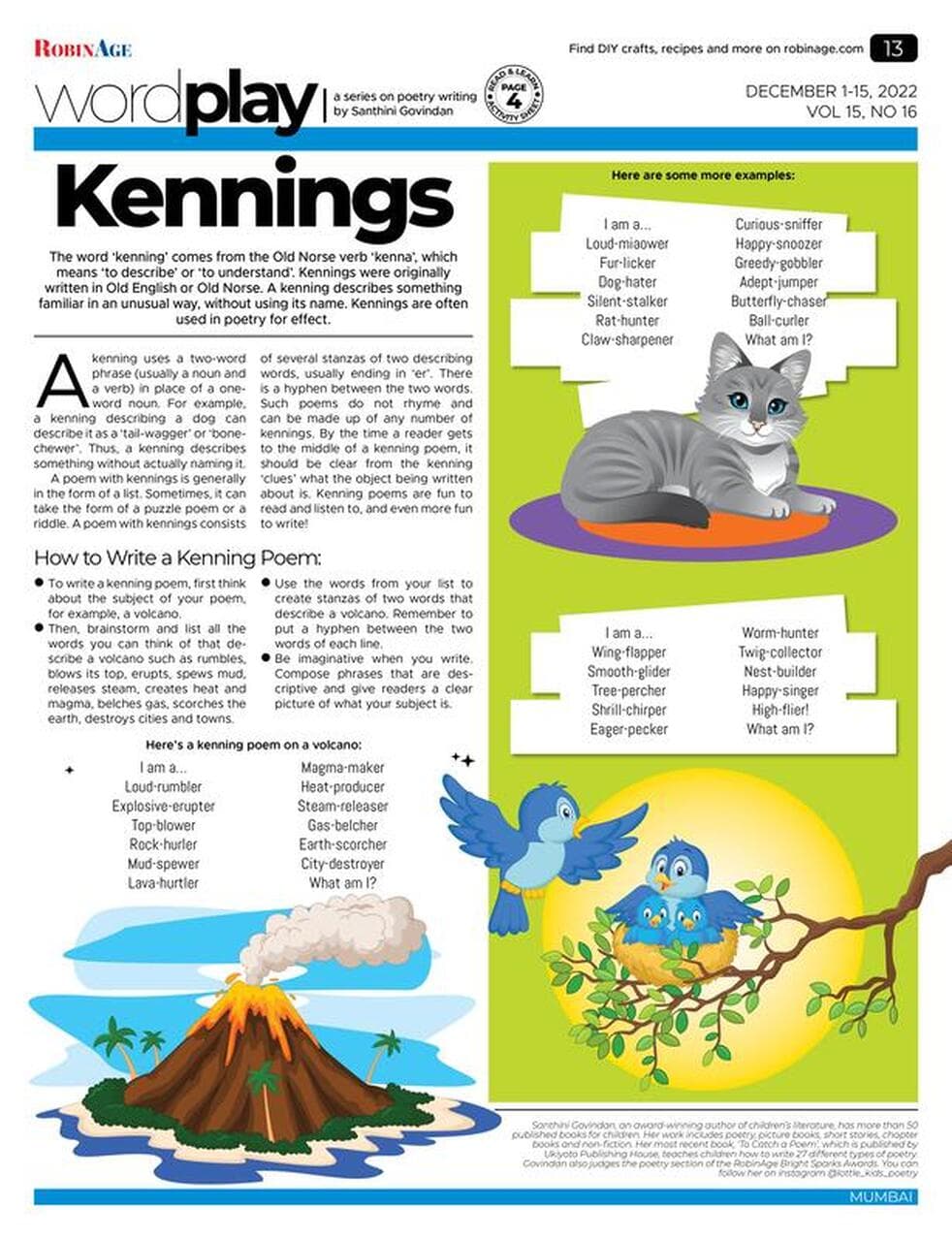
Kennings

Kennings

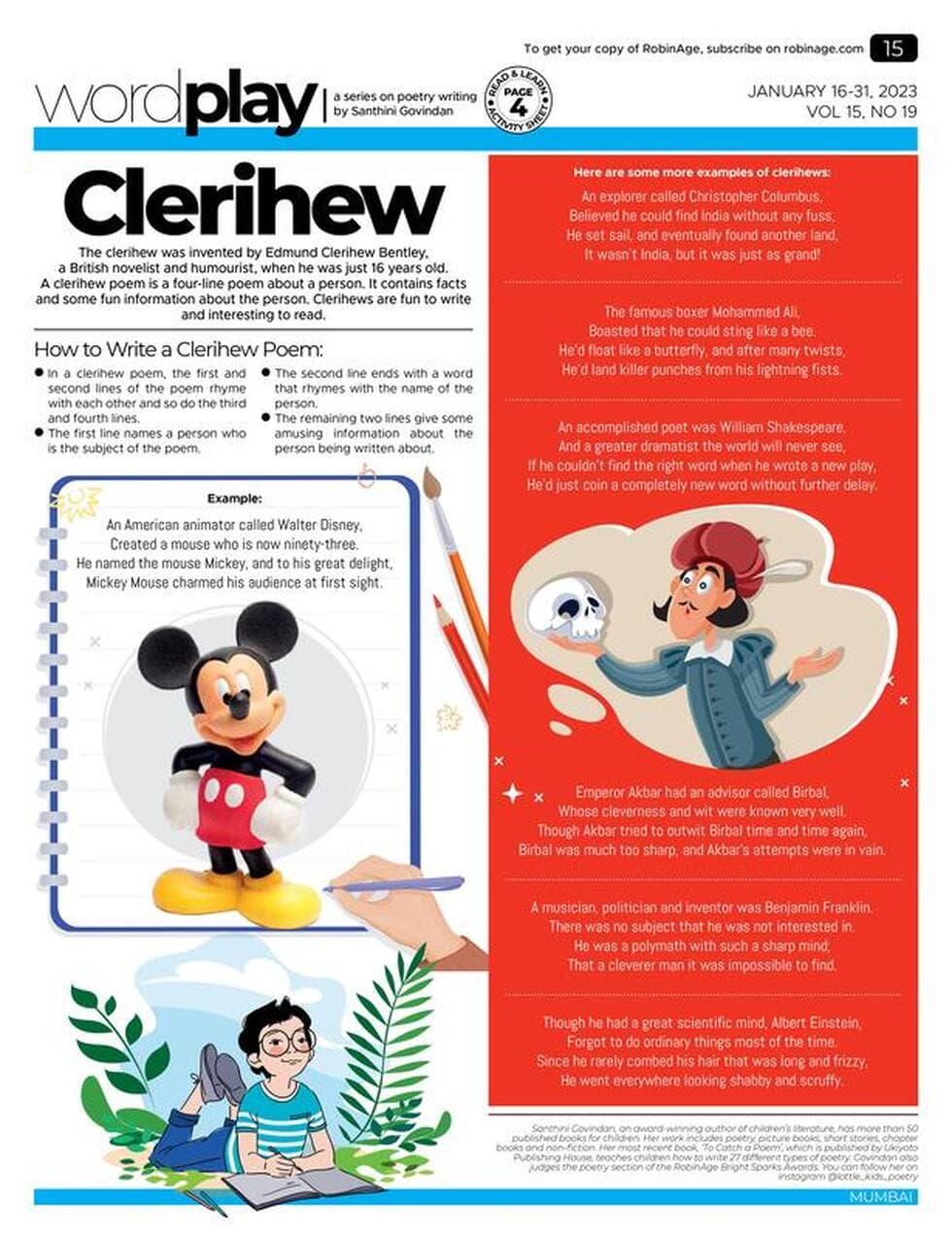
Cherihew

Cherihew

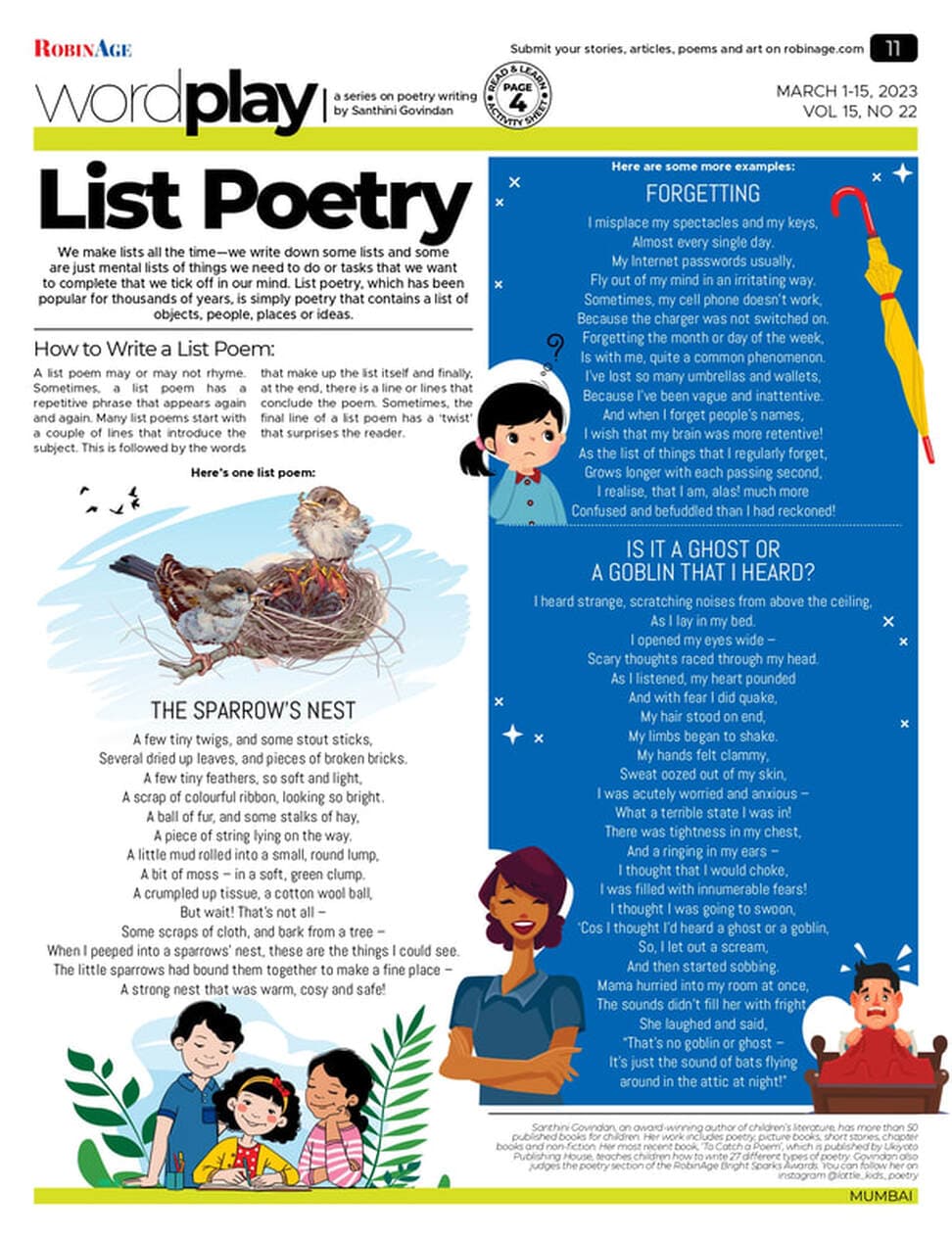
List Poetry

List Poetry

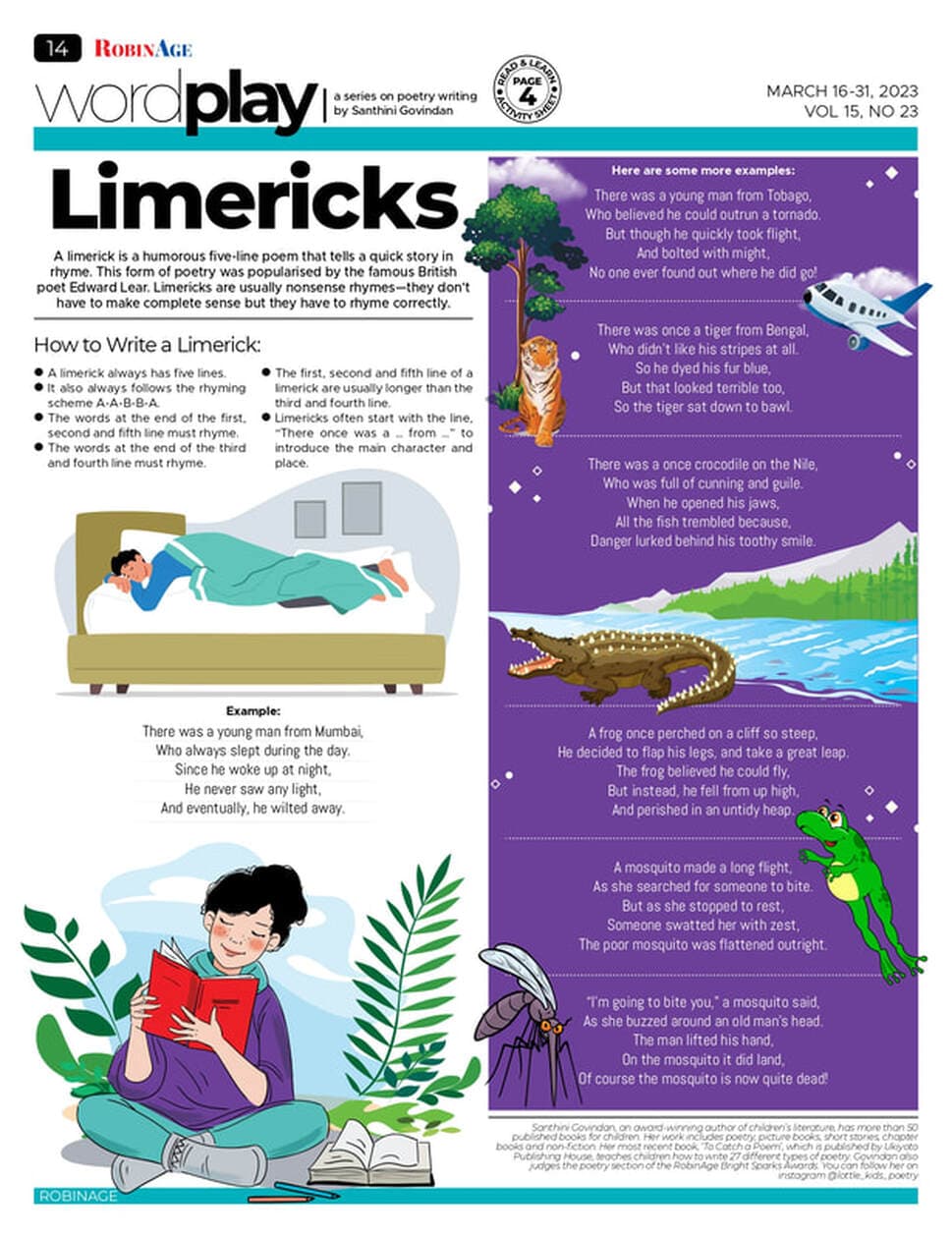
Limericks

Limericks

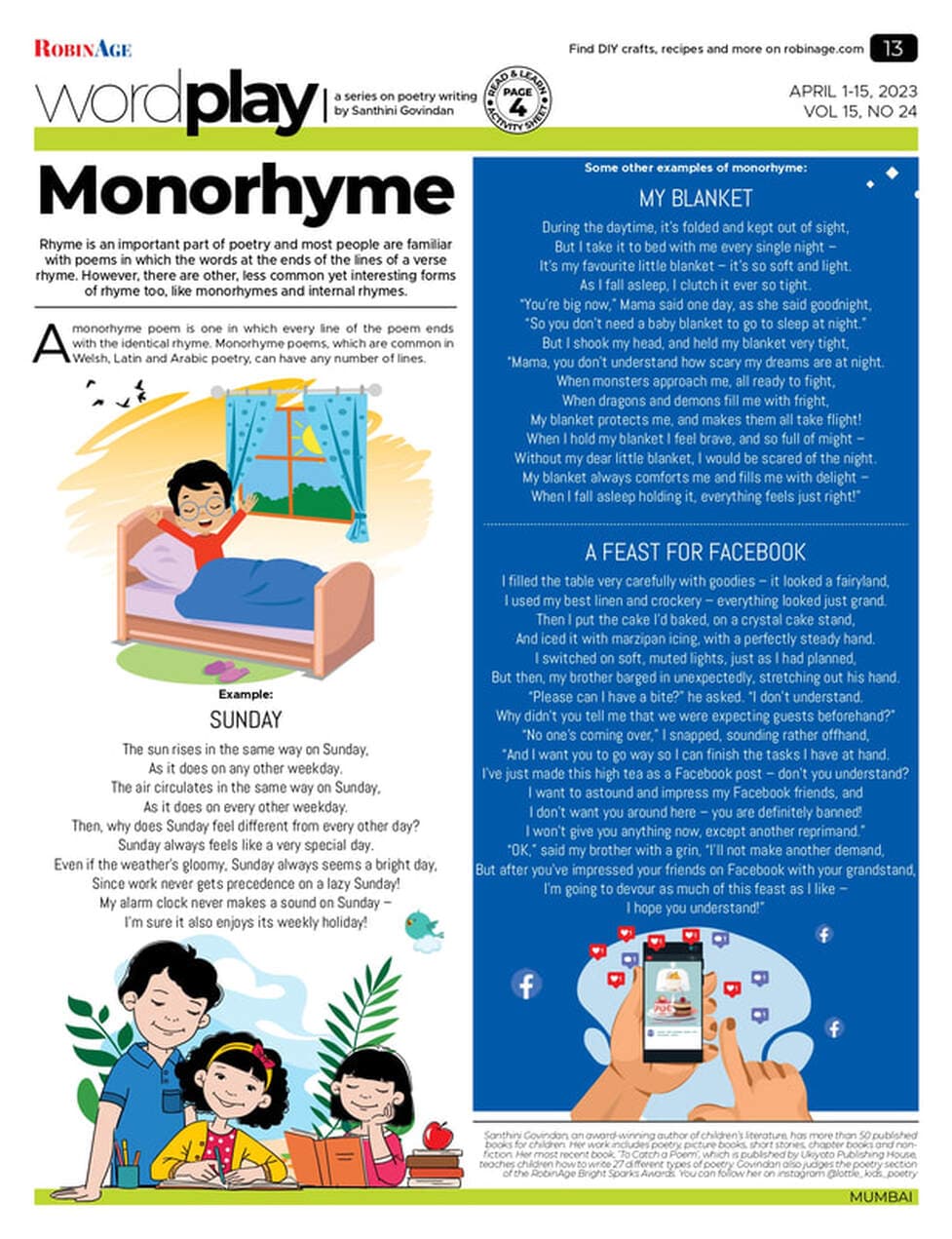
Monorhyme

Monorhyme

Features

Magazine Contributions

For over 25 years, I have been writing non-fiction feature articles for The Children's Digest, a leading magazine for children published by the Rashtra Deepika group of newspapers, Kottayam, Kerala. Many of these articles (over 125) have been selected for use in school textbooks, online websites, and other magazines.

Publications I've Written For

Children's Digest
Chandamama
RobinAge
Tinkle
Children's World
The Children's Magazine
Champak
Magic Pot
Highlights
Bento
Bacchon Ka Desh
Parenting
BTW (By The Way)
Chhatra Prabodhan
The Hindu Young World
Deccan Herald
The New Indian Express
Afternoon Despatch & Courier

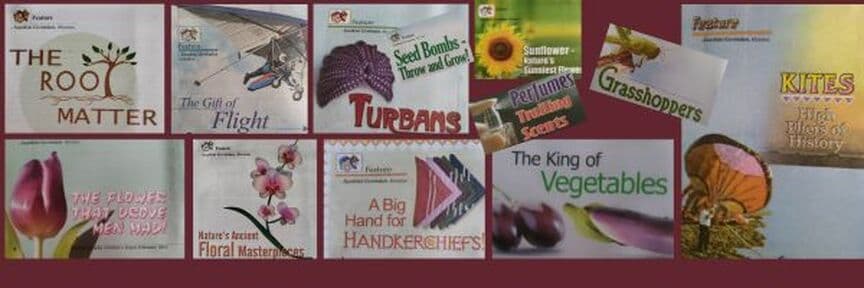
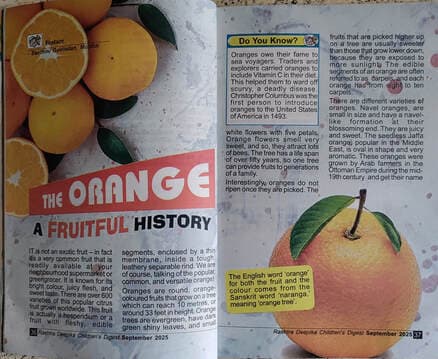
Children's Digest - Selected Article Titles

Children's Digest - Selected Article Titles

Children's Digest - May Issue Feature

Children's Digest - May Issue Feature

Children's Digest - December Issue Feature

Children's Digest - December Issue Feature

Children's Digest - Feature Spread

Children's Digest - Feature Spread

4 entries from Children's Digest.

From the pages of Chandamama magazine

4 story features. Expand to view.

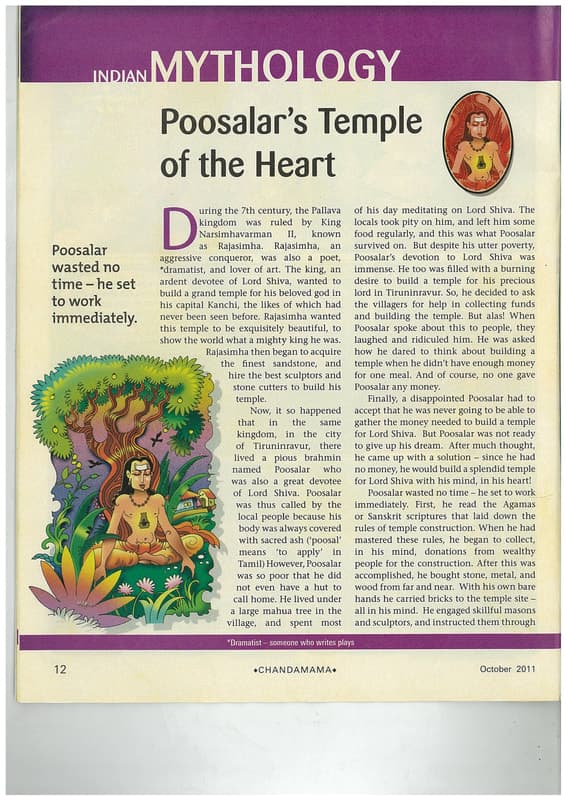
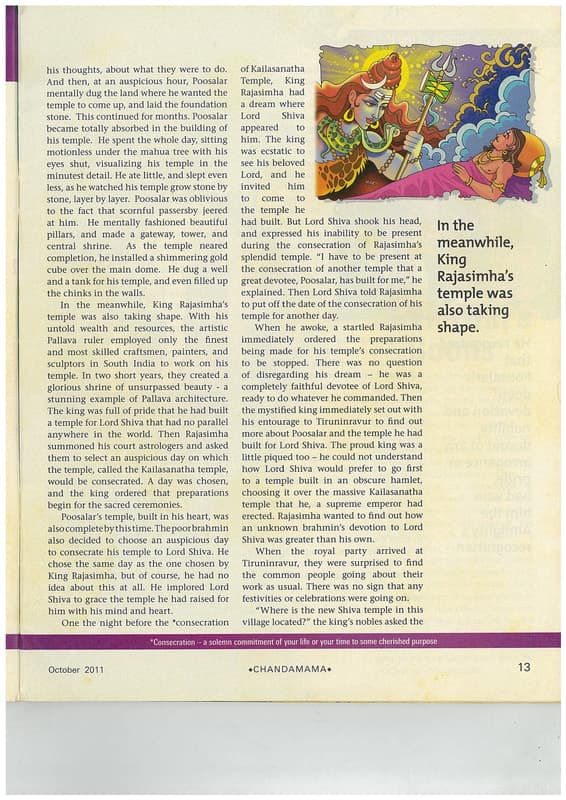
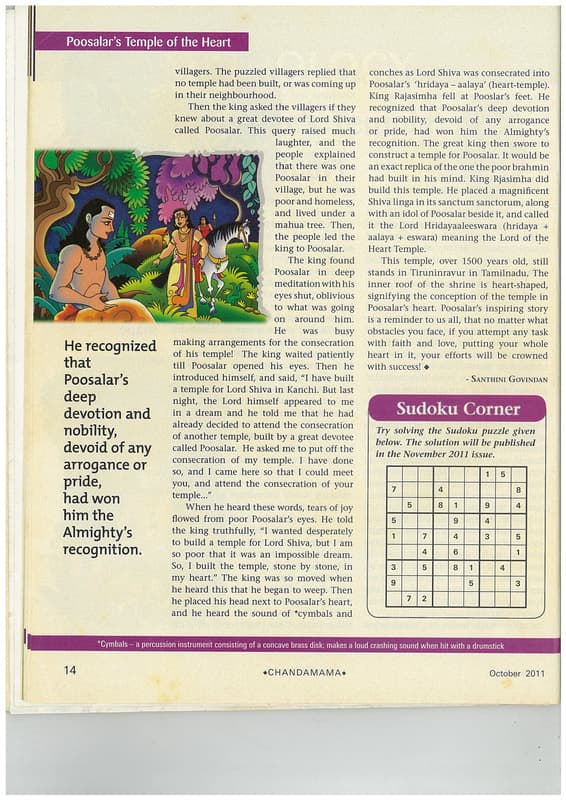
Poosalar's Temple of the Heart

Poosalar's Temple of the Heart - Page 1
Poosalar's Temple of the Heart - Page 2
Poosalar's Temple of the Heart - Page 3

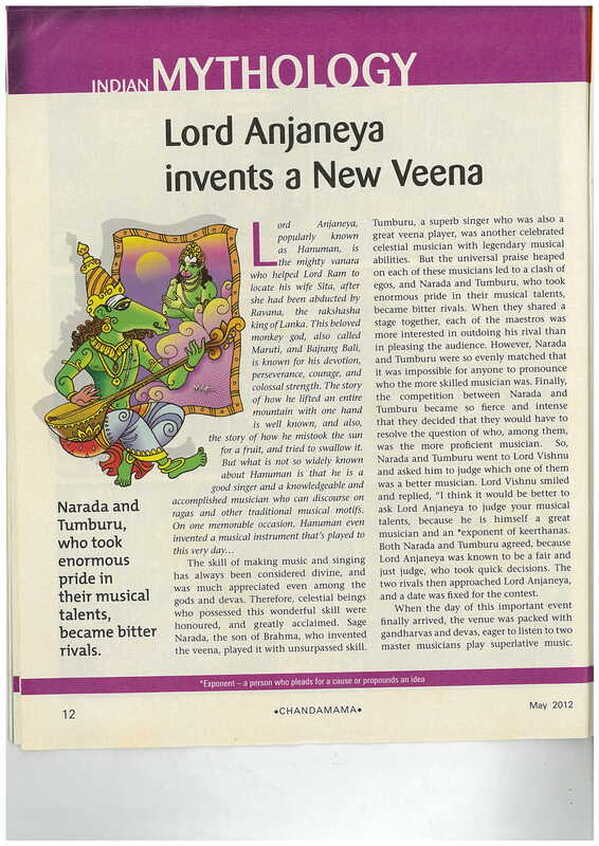
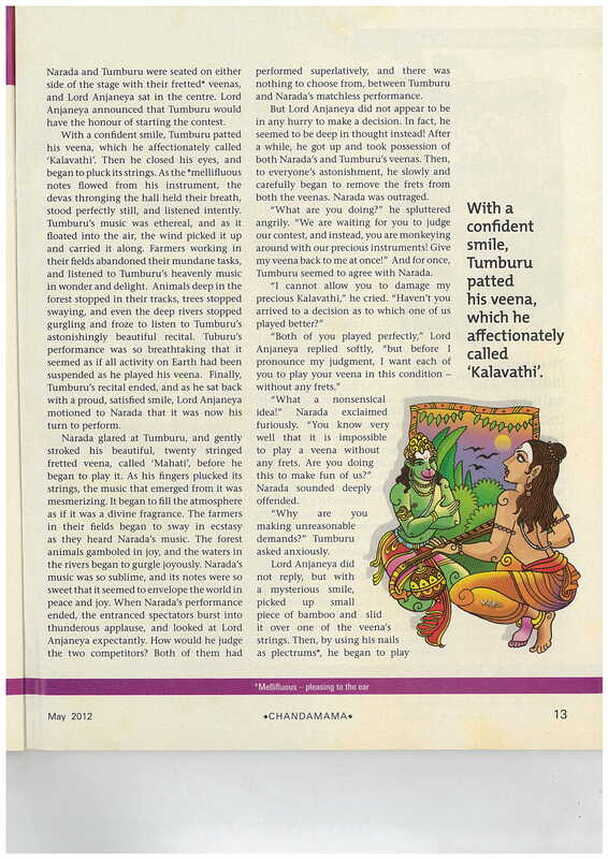
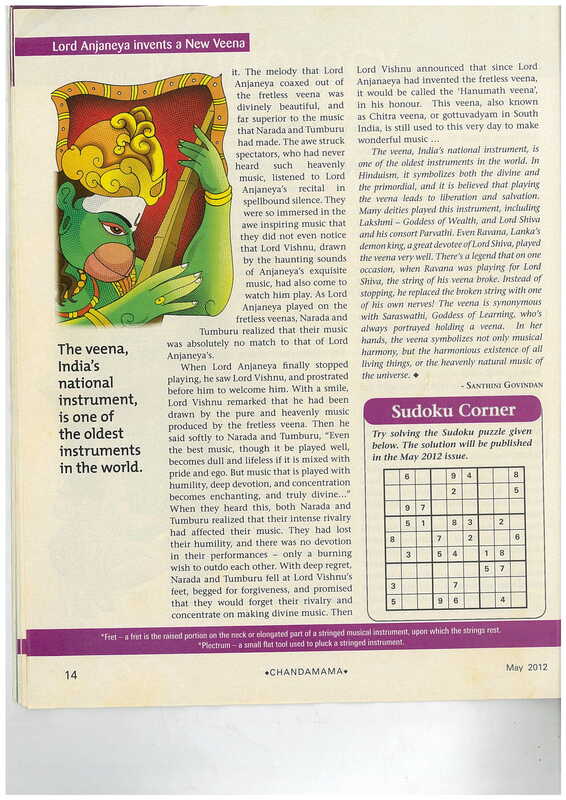
Lord Anjaneya Invents a New Veena

Lord Anjaneya Invents a New Veena - Page 1
Lord Anjaneya Invents a New Veena - Page 2
Lord Anjaneya Invents a New Veena - Page 3

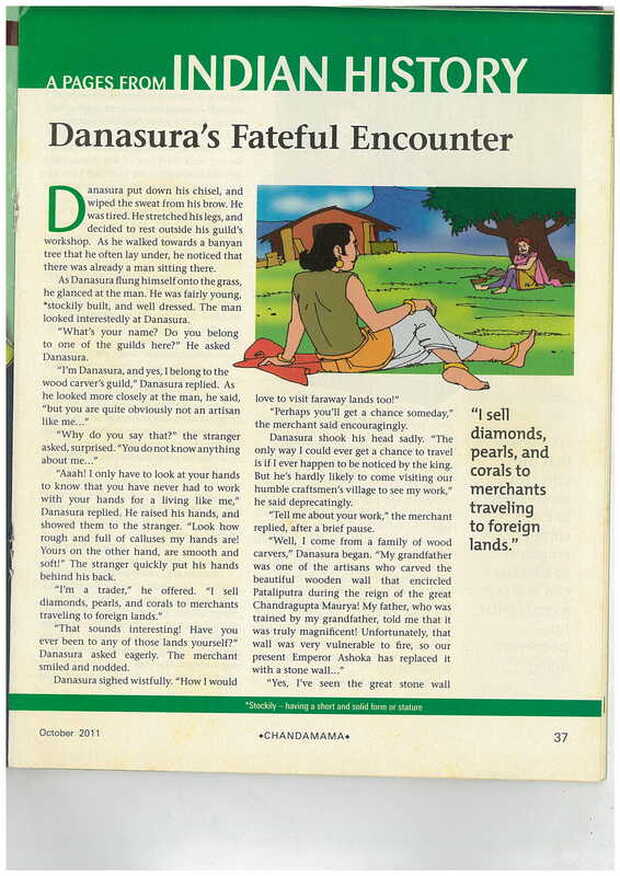
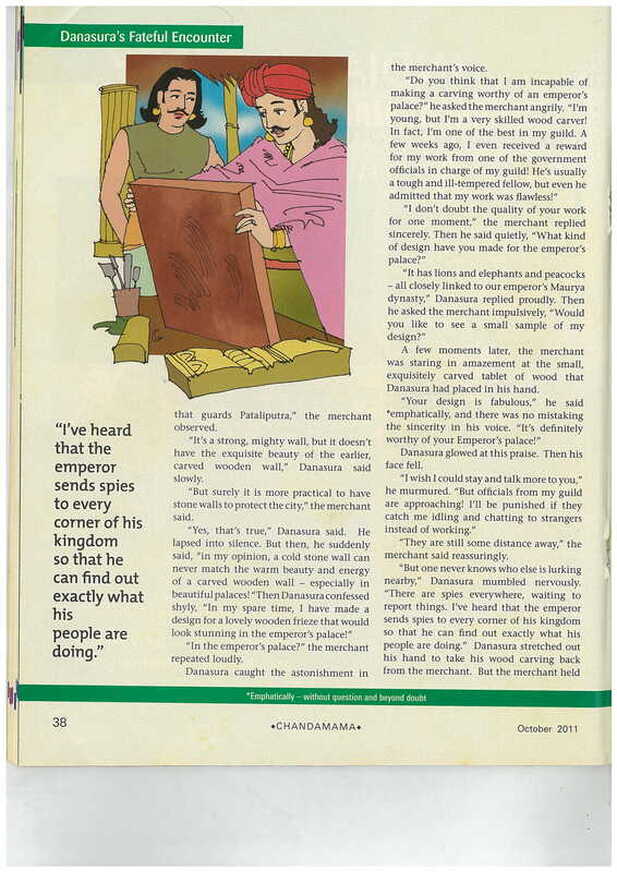
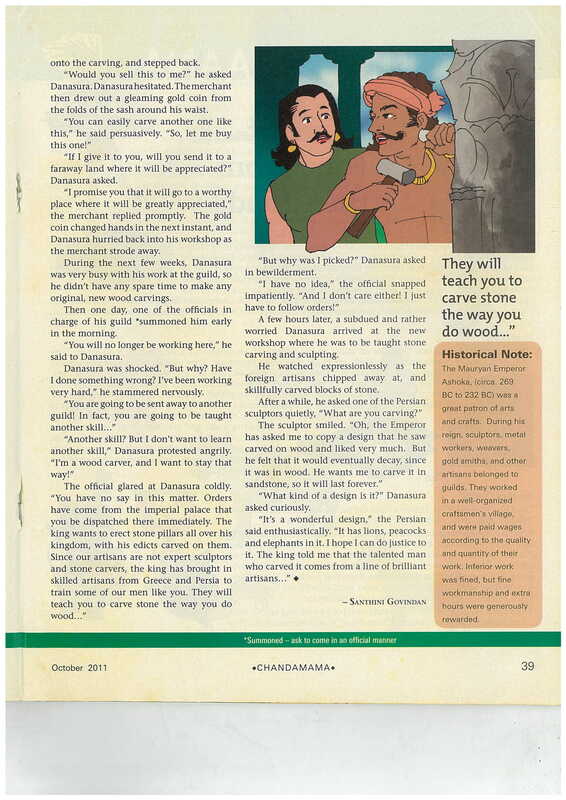
Danasura's Fateful Encounter

Danasura's Fateful Encounter - Page 1
Danasura's Fateful Encounter - Page 2
Danasura's Fateful Encounter - Page 3

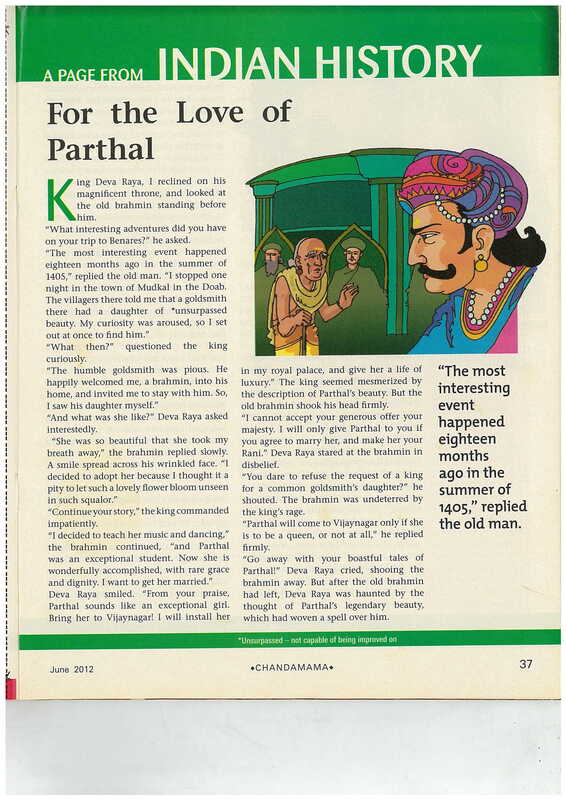
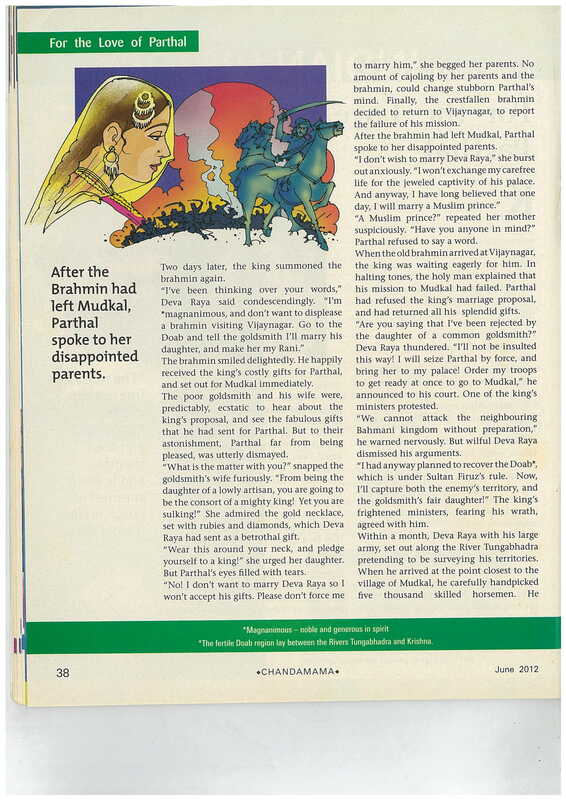
For the Love of Parthal

For the Love of Parthal - Page 1
For the Love of Parthal - Page 2
For the Love of Parthal - Page 3

Read here

Read Here

6 stories available. Expand any title to read the full story.

The Day of the Toad

Young World, The Hindu, 1995

A page from Wally Grows Up (Children’s Book Trust, 1994), illustrated by Chaitali Chatterjee.
Illustration accompanying the story.

Croaky was a big, fat toad who lived in a large field, thick with jungle grass. I am sure you can guess why he was called Croaky. Yes, of course – it was because of the hoarse croaks that came from deep within his throat. Croaky looked like any other toad. His bulbous eyes bulged from his head, and his rough skin was covered with warts. He had no teeth, and so, when he parted his thin, wide lips to smile, he looked very ugly indeed. But Croaky did not seem to mind his ugliness at all. He did not long to be beautiful, nor did he try to beautify himself. This was because Croaky believed in fairy tales, or rather, in one particular fairy tale, which he firmly believed, was one day going to change his life forever. And he had come to hear about it purely by chance.

He had been crouching lazily near a slushy little pond that lay in the middle of his field, his eyes half shut. He had taken no notice whatsoever of the lovely, long-necked swan who had brought her seven babies to the pond for a swim. The cygnets were rather unattractive, and as they splashed about noisily in the water, Croaky had heard one of them ask his mother shrilly, “Mama, when will we become as beautiful as you are?”

“Be patient, dears,” Mother Swan had replied lovingly in a soft voice. “Someday, you will all be beautiful swans.”

“Oh good!” the precocious little cygnet replied. “I do so want to be beautiful! I should hate to go through life looking being as ugly as old Croaky, for instance.”

“Hush!” said mother swan, silencing him instantly. “You really must not speak like that, dear. It is terribly ill-mannered, and vain. And who knows? Perhaps old Croaky will turn into a prince one day…”

“Turn into a prince? Whatever do you mean?” asked the cygnet curiously.

Mother swan shrugged, and laughed. “It’s just a fairy-tale,” she said carelessly, “but an interesting one. If you are all good, I shall tell it to you when we are drying off after our swim.”

And that was how Croaky came to hear the story of the frog prince.

As he had crouched in the thick grass, he had heard mother swan narrate the story of how a beautiful princess had once lost her little golden ball in a pond while she was playing. And the ball had been seized by a toad – one exactly like Croaky himself. But did the toad return the ball to the princess? No! Croaky had heard mother swan say that the toad had made the princess promise that she would take him to her palace if he returned her precious ball to her. And, so, the toad had gone to live in the fair maiden’s palace. And then, wonder of wonders! Croaky heard that there, the beautiful princess had kissed the toad. Yes! Then, magically, his hideous scaly skin had fallen away, and he had turned into a handsome, dazzling prince.

It was the most wonderful story that Croaky had ever heard, and long after mother swan had left with her family, her words rang in his ears. As he sat there silently in the tall grass, and mulled over the tale in his mind, he began to feel excited. Croaky was sure it had been a true story. And it had happened to a common, ordinary toad like him! Why, the more he thought about it, the more Croaky realized that it could happen to him too. He, Croaky the toad, could well turn into a handsome prince one day. In a flash of inspiration, Croaky decided that when he became a prince, he would call himself Prince Dazzle.

Now, once he had heard this fairy tale, Croaky could think of nothing else.

He spent his days dreaming of how he would turn into a prince. But he soon realized that hidden away among the tall, overgrown grass, there was no way that a princess would ever find him. So, Croaky decided that he would take up a vantage position near the pond.

He jumped on to a rock, and sat upon it. His bulging eyes darted all round the field, as he surveyed the landscape for the beautiful princess who he was sure, would come to find him. He perched patiently on the rock in this manner for many days, in sun and rain, and waited and waited.

An old turtle, who also lived near the pond, watched Croaky curiously for a few days. Finally, when he could contain his curiosity no more, he ambled up slowly to Croaky. “Croaky,” he said in a puzzled tone, “pray tell me, what on earth are you doing, perched on that rock for days on end?”

Croaky replied, “I’m waiting for a princess to find me. She will take me away to her palace, and there, she will kiss me, and I will turn into a prince! And you know what? I’m going to call myself Prince Dazzle.” A note of great pride and triumph crept into his voice as he spoke the last few words with a flourish, and looked down patronizingly at the turtle.

The old turtle was silent for a moment, and then a slow smile spread across his wrinkled, weather-beaten face.

“My dear Croaky,” he said, chuckling softly. “How can you possibly believe such nonsense? Such things don’t happen in real life — they happen only in fairy tales! You are never going to become a dazzling prince…”

“Oh, pooh,” Croaky butted in rudely, looking down scornfully at the turtle from his lofty perch. “You are only saying that because you are jealous. Why, I’m sure you’d secretly like a princess to kiss you too, and turn you into a dazzling prince.”

“Not at all,” said the turtle firmly. “I’m quite sure that I like being myself. And as for you, you’d better get off that rock quickly. If you are not careful, you will be seized by schoolchildren looking for toads to dissect, and then, you’ll be cut into little pieces in their school laboratories…”

Croaky sniffed contemptuously and murmured under his breath. “Not me! I’m going to become Prince Dazzle.” The turtle continued, “Once they caught me also, and they took me to their school laboratory to display me as a specimen. A dreadful experience it was too.” He shuddered violently at the memory. “I did not put my head out of my shell for two whole days while I was there. The laboratory was full of frogs and toads like you, and most of them had been cut up into little pieces! Good grief! What a relief it was to me when they threw me back into our field. You’d better be careful, Croaky,” he warned.

But Croaky, ambitious toad that he was, paid no attention to the wise turtle’s words. He continued to sit hopefully on the rock every day, and then, unexpectedly, one day, a small girl came to the pond. She was riding a big, red bicycle, and was wearing a pleated grey school pinafore with a white blouse. She did not look like a princess at all, but Croaky, who had never seen a princess before, did not know that. He watched excitedly, with bated breath as she took off her shoes and socks and waded carefully into the pond.

“Croak! Croak!” Croaky said loudly, in what he believed were warm, welcoming tones. “Here I am! I’ve been waiting for you for so long!” He trembled in excitement. His big dream was going to be realized at last.

The little schoolgirl moved forward nimbly, and then for Croaky, his dream started to turn into a nightmare. For the little girl, with surprising speed, whipped out a little black net that she had hidden in the folds of her pinafore. She threw it over Croaky, sitting hopefully on his rock. As the strong, black web fell over him, it held him tight within its folds. But poor Croaky did not move a muscle or struggle, for he was too stunned by this turn of events to react.

The schoolgirl quickly snatched up the net, and then, in a trice, had thrust Croaky into a little cardboard box which had a few holes bored in its lid. She tied up the box securely with string in a flash, and hung it on the handlebars of her bicycle. As she tied her shoelaces, she beamed with pleasure. “What a nice, fat toad I have got today for my dissection,” she murmured to herself. “Today is my lucky day!”

But as Croaky sat all squashed up in the little cardboard box, he began to realize what a pitiable state he was in. He shivered as he recalled the wise old turtle’s words, and the awful truth about his situation finally sank in. The person who had found him was definitely not a princess, and he was never going to be a prince either. The fate that awaited him was truly horrible.

Then, with a burst of his old spirit, Croaky decided that he could not let something so dreadful happen to him without at least trying to do something about it. Summoning up all the strength in his body, he began to leap up and down furiously in the cardboard box, using his stout, powerful legs. The flimsy cardboard box began to rock perilously, and the little girl, who was steering her bicycle, took her hands off the handlebars for a moment to try and still its motion. But alas! A moment was all that was needed for the girl to lose control of the bicycle, which zigzagged crazily across the road, and then fell down, with its wheels spinning madly. The cardboard box hit the ground with a thud, and burst open, and Croaky was free! With a mighty leap, he escaped from the box, and by the time the little girl got shakily to her feet, dusted herself down, and started looking around for her toad, he was many, many jumps away. He was soon back in his own field, hidden securely by the tall jungle grass. How happy he was to return to his old home, even though he was still the same ugly toad.

Croaky soon pushed his dream of turning into Prince Dazzle to the back of his mind, and he tried not to think of it ever. But sometimes, the thought still springs to his mind unbidden, once in a way, as he hops around the field where he still lives. And he just can’t help wondering — why do fairytales never come true?

Copyright Santhini Govindan. Please do not reproduce without permission.
Bubbles For Grandpa

YOUNG WORLD, 2017

BUBBLES FOR GRANDPA

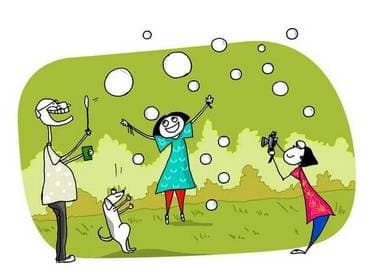
YOUNG WORLD (The Hindu, Chennai) BUBBLES FOR GRANDPA NOVEMBER 03, 2017 Anisha and her friends were excitedly organising a surprise party for Anisha's grandfather's 85th birthday. "I've a great idea," Anisha said. "I'll get a huge bunch of 85, colourful helium filled balloons for grandpa to release into the air. It'll make for a great photograph too." "That's a terrible idea," Meena burst out agitatedly."Why?" Anisha asked crossly. "Everyone likes festive balloons!" "But helium balloons are dangerous for animals and birds!" Meena shouted angrily. Meena was an intrepid animal lover who volunteered at the local animal shelter. As her bewildered friends stared at her, Meena sighed. "I'd better explain that clearly," she said. "A balloon floating into the sky eventually bursts, or loses air, and falls to the ground.

If it's spotted by a hungry bird or animal, the creature swallows it, thinking that it's a tasty scrap. But the balloon can block the animal's or bird's intestinal tract, leading to starvation and a slow, painful death. Balloon strings are equally dangerous. A bird tangled up in a balloon string, can't free itself, and eventually dies. Whales, sea birds, and turtles have choked to death after swallowing balloons. Latex balloons take years to disintegrate." Meena showed her friends a photograph on her cellphone, of a seagull that had died on a beach after getting tangled in balloon strings. Everyone stared at the photograph silently. "We didn't know this, Meena," said Anisha apologetically. "But now that we do, we won't use any balloons." "Thank you!" said Meena fervently.

In the days that followed, Anisha scouted for ideas for party decorations without balloons. Surprise! Finally, grandpa's birthday arrived. When grandpa strolled into the garden, he was surprised to see the large, colourful, tissue paper pompoms Anisha's friends had made, and hung in bunches around the garden. They swayed and rustled as the wind blew. "Did you make these?" grandpa asked Anisha's friends admiringly. "They're superb!" "We didn't use any balloons," Anisha explained. "Meena told us that they can harm birds and animals." "Excellent!" said grandpa grinning. "I hate it when balloons burst with a la loud POP, and terrify my dog Scotty." After grandpa cut his birthday cake, Anisha gave every guest a small bottle filled with a greenish liquid. A little stick was taped to each bottle.

"What's this?" grandpa asked, examining the bent wire attached to the stick. "It's a bubble wand," Anisha giggled. "Try to blow soap bubbles with it!" Grandpa dipped his bubble wand into the soap solution, pursed his lips, and blew gently. A little round bubble immediately appeared. As grandpa blew harder, the bubble grew. Finally, the shimmering, rainbow coloured bubble slid out from grandpa's bubble wand, and floated into the air. Scotty chased it, barking excitedly. But before he could catch it, the bubble burst! As Scotty looked perplexed, grandpa roared with laughter. Soon, everyone was blowing bubbles. Anisha photographed grandpa, smiling merrily, surrounded by a sea of bubbles. "This is fun!" said grandpa. "Scotty and I would like to do this again..."

Copyright Santhini Govindan. Please do not reproduce without permission.
Quiet Flows The River

Young World, 2017

QUIET FLOWS THE RIVER

The story below appeared in the 'Young World' of 'The Hindu' newspaper on November 17, 2017 QUIET FLOWS THE RIVER By 2011, the Kuttemperoor River was dead. That was when the villagers of Budhanoor woke up. In a matter of years, they set to work and revived their beloved river.The Kuttemperoor River had never been a big river. A younger sister of the mighty Pampa and Achankovil in the Alappuzha district of Kerala, she was only about 12 km long, and 100 metres wide. But the Kuttemperoor was a happy river. She stretched through the little village of Budhanoor in Alapuzha, and the villagers loved their beautiful river. The clear, greenish-blue river gave them drinking water, and provided farmers with enough water to irrigate about 25,000 acres of paddy fields.

The villagers fished, played, and swam in the river, and local traders transported their goods on it in small boats. Every day, the river heard the excited shrieks of children as they leapt into her clear, cool water. She watched birds dive into her swirling currents to catch fish. She smiled as she listened to the chatter of women washing clothes on its banks. Her waters washed gently over the huge elephants from nearby temples that came for a bath in the river. Buffaloes waded into the river, and she let them wallow happily in her rippling water. The generous river was home to all kinds of fish, turtles, water snakes, and even crocodiles. Every year, when the monsoons lashed Kerala, the Pampa and Achankovil overflowed.

The Kuttemperoor generously absorbed the extra water from her sisters, so that the settlements clinging tenaciously to their banks didn't get flooded. But as the years passed, things changed for the small river, and for the little town of Buddhanoor. Industrialisation brought toxic waste to the area, and it was dumped into the Kuttemperoor. The river was upset by this. She coughed and gasped for breath. She tried desperately to wash away all the dangerous and noxious chemicals that were tossed so callously into her body. But she couldn't, and to her dismay, piles of plastic bags, bottles and tin cans were added to the garbage that were thrown into her. The desperate river struggled to push all the trash deep down onto her bed so that she could breathe, but the mountain of garbage was just too much for her to cope with.

By 2005, the Kuttemperoor had shrunk to a width of only 10 metres. Her once swiftly flowing water, moved slowly, and was smelly, dark, and murky. Weeds grew in tangled masses on her banks, and the aquatic creatures that had played in her waters were rapidly dying. The Kuttemperoor was choking to death. Death throes In 2011, a boat got stuck in the water of the river that had, by this time, turned to a gooey sludge. How the river wept as firemen dragged the boat out. "Help me! Save me!" the river cried out from her heart. But no one heeded her cries, and in a few months, the heart broken river, which had been so badly treated, just sunk sadly into the ground in despair, and perished. Budhanoor no longer had a river. After the Kuttemperoor vanished, the villagers realised that the river had been their lifeline.

She had provided them with water to drink, plenty of fish, water for their paddy fields, and a delightful place to play, and enjoy themselves. But they had failed their gracious and generous river. They had not looked after her health and her needs. As they sorely missed, and remembered their lost river, the villagers were filled with sorrow and deep remorse. In 2013, the members of the Budhanoor village panchayat decided that they would try to bring their beloved river back to life. But this was easier said than done. It took four years for a viable plan to be made, but by January 2017, the project to revive the Kuttemperoor was implemented under the government's Mahatma Gandhi National Rural Employment Guarantee (MGNREGA) scheme.

Seven hundred men and women from Buddhanoor volunteered to work to clean up the river, which was now nothing more than a slushy swamp. Revival First, the villagers had to wade into the dirty water and cut out the dense growth of water weeds that hid the river's face. Next, they had to remove all the plastic waste that had choked away its life. And finally, the villagers had to clean the thick layer of trash that was clustered and embedded at the bottom of the river bed. All this was no easy task. Mosquitoes swarmed the villagers, biting them as they worked. Many fell ill, but they were not deterred from their task. They were on a mission, and were determined that they would do whatever it took to bring their beloved river back to life.

They slaved away clearing away the sewage, plastic waste and clay sediments that had destroyed the Kuttemperoor. After 45 days of hard work, clearing tonnes of garbage, the river, which had been dead for years, was slowly resuscitated. As she awoke, water started slowly flowing in the river bed. The triumphant and delighted villagers pressed on even more enthusiastically. By the 70th day of their work, the Kuttemperoor had started flowing normally again. Buddhanoor's beloved river was back! The villagers welcomed her joyfully. The river was so delighted to return to her precious land that she gave the wells in the neighbourhood the gift of increased water. She invited fish and other aquatic creatures to return to her cool water.

The people of Budhanoor village still do not use the water of their river for cooking and drinking, but they are confident that they will be able to do so in the near future. They put their heart and soul into reviving their precious river, and now, they take great care of her health. They are careful not to pollute her, because they are determined that their happy river will live forever...

Copyright Santhini Govindan. Please do not reproduce without permission.
Bath With Three Buckets Of Water

A Quick Read, 2000

BATH WITH THREE BUCKETS OF WATER

A BATH WITH THREE BUCKETS OF WATER During weekends when she had no school, eleven year old Rohini accompanied her mother Gowriamma to work. Gowriamma worked as a maid in a large bungalow not too far from the slum where she lived. She had to sweep and mop floors, and wash mountains of dirty clothes and dishes day in and day out. She was relieved on those days when Rohini was around to give her a helping hand. Though Rohini had to work hard alongside her mother too, she really enjoyed going to the 'bungalow', because a friendly little girl named Anuja, who was about her own age, lived there. On Saturdays, after Rohini had whizzed through her share of the chores, she would hurry upstairs to meet Anuja. Anuja had a room of her own. It made Rohini's eyes light up; for it was the prettiest room she had ever seen.

She marvelled how everything in it always looked clean and bright. Anuja had cupboards heaped with expensive books and toys that Rohini gazed at with wonder and delight. She also had a dressing table, with drawers full of trinkets and hair clips. Sometimes, when Anuja came across a bauble that she was tired of, she would press it into Rohini's palm with a smile. Anuja's room also had its own luxurious attached bathroom, and Rohini found this fascinating. Its blue tiled walls were sparkling, and whenever she had to clean the bathroom, Rohini liked to lay her cheeks against them to feel their icy coolness. The tiled floor was slippery too, when wet, and Rohini giggled at the way her feet always skidded on their smooth, shiny surface.

The shelves in the bathroom were filled with shampoos and soaps, and Rohini loved the way their delicate fragrances lingered in the air. The bathroom had a shower and three large blue plastic buckets. And of all the wonderful things in Anuja's room, it was these three plastic buckets that Rohini thought about the most. In the crowded, squalid slum where Rohini lived with her parents and siblings, 'home' was just one tumbledown room where the family cooked, ate and slept as well. There was no running water in the slum, and so all its residents had to get water for their use from a single municipal tap that stood outside the slum. But this tap didn't flow freely throughout the day. Water gushed out of it only in the early hours before dawn - during the rest of the day the tap either ran dry, or dribbled and spat out water feebly.

Each house in the slum had, therefore, to depute one family member to wake up early and stand in the long, winding queue to get their daily requirements of water. In Rohini's house, this job always fell to her. Rohini had to wake up at four o'clock every morning and stagger sleepily towards the tap, carrying a motley collection of old buckets, rusty tins, and plastic jerry cans. Rubbing her eyes and yawning, Rohini would then join the long queue of impatient people waiting to fill up their water containers. Often, tempers ran high, and vicious fights broke out in the queue. Sometimes, Rohini would oversleep, and then, no matter how quickly and desperately she dashed to the tap, she would loose her place at the beginning of the queue. On such days, the wait for her turn to fill up water would be interminable.

Sometimes Rohini felt exhausted, and she would fill only some of her containers, just so that she could lighten the burden she had to carry back home. There were unlucky days too, when the tap ran completely dry, and made exasperating gargling noises instead of spurting out water. On these days, Rohini would stoically trudge to an old well nearby to fill up her buckets with its muddy and salty water. Rohini knew well what a struggle it was to get water, so she used her family's precious stock sparingly. But sometimes, when she had to bathe with just half a bucket of unclean water, she allowed herself to daydream... She would close her eyes tightly to shut out the dark, clumsily screened off corner of their ugly hut that served as a make shift bathroom, and instead, she would pretend that she was bathing in Anuja's beautiful blue bathroom.

And Rohini would smile as she imagined how she would lather herself slowly with a soft, creamy, scented soap. And her body would tingle as she imagined the grand finale - rinsing herself with three buckets of clean, fresh water. This was Rohini's favourite daydream, and on hot summer days when she felt sweaty and itchy, it popped into her thoughts often. Then one day, Anuja's family had to leave town for a few days. Gowriamma was given the keys to their bungalow and instructed to come in everyday to keep the house clean. But she fell ill with a fever as soon as her employers had left. " Don't worry Ma," said Rohini reassuringly to Gowriamma who was anxious about her job. "I can go to Anuja's house and do your work. I know what is to be done, so you can rest." "But what if Amma finds out? " said Gowriamma doubtfully.

" She won't," replied Rohini confidently. Gowriamma nodded wearily. The next day, Rohini set out to work at Anuja's house. She did all the chores conscientiously, mindful of her all her mother's admonitions. But after a few days of this routine, Rohini's initial nervousness vanished, and she began to linger in the beautiful bungalow. And as she cleaned Anuja's bathroom on one of these days, an idea came fleetingly to her mind. Rohini quickly dismissed it. It was too outrageous to consider! But late that night, as she fell asleep, the idea drifted into her mind again, - unbidden, but oh so tempting! Why should she, Rohini, not have a bath in Anuja's bathroom? In the empty bungalow, she would be able to enjoy the luxury of bathing undisturbed with three buckets of clean water!

The idea was irresistible, and throwing caution to the winds, Rohini decided to do it! The next morning Rohini neglected her work at the bungalow, and hurried to Anuja's bathroom excitedly. Humming happily, she turned on the water faucets. 'I'll wait for all the three buckets to be full before I begin my bath,' she thought to herself. But the noise of the running water was so loud that she didn't hear Anuja's family's car drawing up outside. She was not aware either, that the family had come up, till she heard Anuja's mother's swift exclamation of dismay from the doorway. "What are you doing here, and where is your mother? " Anuja's mother's voice was like a whiplash. Rohini stood rooted to the ground in terror. "My mother is sick, so she sent me to do the work." Rohini whispered. " But you weren't working!" cried the lady furiously.

"You crept into Anuja's room instead! What were you hoping to steal for yourself? ANSWER ME!" Her lightning glance swept the room, making an inventory of all Anuja's belongings. Rohini began to shake. She was so frightened that her words stuck in her throat. Anuja's mother's lips tightened angrily. " Since you refuse to give me an explanation, I'm summoning your Mother! She'll get an answer out of you!" When Gowriamma arrived at the bungalow, she began to weep as she heard her angry employer's story. She dealt Rohini a stinging slap on her cheek. " What were you doing in Anuja's room? " she demanded. There was a stricken look on her face. Rohini knew that she was terrified that she was going to loose a good job. " I promise I wasn't going to steal anything," Rohini burst out piteously, hot tears welling up in her eyes.

" I was here only because I wanted to have a bath." " A bath? " Anuja's mother sounded utterly disbelieving. " Yes, a bath. With three buckets of water." whispered Rohini, averting her face in shame. "I've never had more than one bucket of water with which to bathe, and I thought..." Reaching into the khaki shorts she wore under her dress, she produced a sliver of soap, as hard as a piece of wood. "Why you lazy girl!" Gowriamma shouted angrily," Why don't you get up earlier and fetch more water? I shall thrash you black and blue when we get home!" Rohini looked sadly at Anuja's mother through tear filled eyes. But all of a sudden, the lady's anger seemed to have evaporated, and she was silent. " Amma, please believe me," Rohini appealed desperately, her voice breaking. " I believe you," replied Anuja's mother, in a husky voice.

"Oh thank God," cried Gowriamma, overcome with relief. Rohini dashed towards the door, eager to get away. But as she reached the doorway, Anuja who had been standing all the while as if turned to stone, suddenly sprang to life. "Wait Rohini!" she called out urgently. "I won't let you go yet!" Rohini looked back over her shoulder at Anuja, fearful and hesitant. Anuja smiled at her friend, and her eyes were suspiciously bright. "You haven't had your bath yet, remember? All the three buckets of water in my bathroom must be full by now..." 'A Bath with Three Bucket of Water,' first appeared in 'Open Sesame,' the weekly supplement for children of the 'Deccan Herald' newspaper, on October 21 st, 2000. D o not reproduce without permission from the author.

Copyright Santhini Govindan. Please do not reproduce without permission.
Police Dog Pande

Young World, 2006

POLICE DOG PANDE

POLICE DOG PANDE None of the regular vendors on Platform No 6 at the Dadar railway station could remember when the brown and white mongrel had come to live in the station. He soon became a regular fixture there though, and rapidly acquired the essential skills he required to survive. The dog learnt to scurry away from the platform when local trains thundered into the station and disgorged a milling mass of humanity. The people on locals were always seemed to be in a tearing hurry, and the dog realized that not only did they not carry food scraps, but also they were impatient, and kicked aside anything or anyone that came in their way. But the long distance trains were another matter altogether. The dog knew when one was arriving because the turbaned coolies in the station would leap up eagerly and run to take up positions on the platform.

Then the dog would sit quietly on a corner of the platform too, smacking his lips in anticipation. The dog had discovered that travelers on long distance trains always carried oodles of food with them, and when they reached their destination would invariably discard the remnants. The dog feasted when a long distance train chugged into Dadar station, and during the rest of the time, he used his wits to find food. This was a difficult task, because none of the vendors who hawked food on the platform liked him. The biscuit vendor kept a stout stick tucked into his belt, and he waved it threateningly whenever the dog trotted behind his cart. The samosa vendor was even harsher - he hurled sharp stones at the dog whenever he saw him in the vicinity of his booth.

Even so, the dog sometimes outwitted them both, and ran away triumphantly with a hot samosa or a packet of biscuits that he had robbed when their heads were turned! The dog usually nosed in the dustbins on the station platform when the pangs of hunger gripped him, and though they usually contained some scraps of stale food, there were often times when he had to go hungry. The dog always tried to find a quiet comfortable place to sleep, away from the tooting trains and noisy crowds, but this was hard too. He had been beaten and chased away when he had tried to stretch himself out on one of the wooden benches in the second-class passengers waiting room. He could never creep under one of the iron benches that dotted the platform either, because travelers stuffed their boxes beneath them, and shooed him angrily away if he went near.

It was on a day when the dog was trotting along the platform looking for a place to catch forty winks that he spotted the room that served as the station's police chowky. Two stout police officers sat talking at a big table in the center of the cool, clean room. The dog stared interestedly at the inviting calm of the room, and then, inched towards it slowly and deliberately. When he reached the doorway, he put his head down and slunk silently into a corner of the room. Then he closed his eyes contentedly and drifted off to sleep. Later, when one of the police officers got up from his chair, he spotted the dog dozing in a corner of the room. "Hey! Who's this?" he exclaimed. The dog woke up with a start, and shrank back when he heard the policemen's loud voice.

"Oh it's only a harmless stray dog," said the other policeman who was rather kind. "I've noticed him running along the platform. Let him be." When the dog found that his presence was unchallenged, he came back to the police chowky the next day as well, crept into the corner again, and took a nap. The dog soon realized that he was onto a good thing, so he took care to be as quiet and unobtrusive as possible when he was inside the police chowky. He never barked or scratched himself, and he never got underfoot when the police officers were moving around. Soon they got quite used to the dog's presence, and when he began to wag his tail tentatively at them, they were not entirely displeased either.

They clicked their fingers at him sometimes when they had nothing to do, and sometimes even tossed a remnant chapatti his way after they had finished their lunch. The dog soon became bolder, and began to trot behind the policemen when they took rounds of the station. As he did so, he discovered that they commanded a lot of respect and fear, and it was to his advantage to be seen with them. The samosa vendor never shouted abuses and hurled stones at home when he was walking behind the police officers! And as the days went by, the dog intently observed the police at work. He watched carefully when they caught petty thieves and pickpockets and searched people's luggage, and he understood what they were about. And then one day, the dog was sitting on the platform waiting for a long distance train to steam in.

The platform was crowded with departing passengers as well, and as the dog cocked his ear and listened for the whistle of the arriving train, a loud shriek rang through the air. A pickpocket had dashed across the platform and snatched the handbag slung on the shoulder of a waiting lady passenger. And then, as she shrieked in horror, the thief sprinted across the platform and got away. "Catch him!" the lady shouted. The biscuit vendor began to give chase, but the thief was already way ahead, and he soon stopped. "Oh no!" the lady wailed. "My purse with all my money is in that bag! I'll never see it again!" "Look!" cried the samosa vendor suddenly, pointing excitedly. The dog had leapt up from his place and was bounding across the platform in pursuit of the thief.

His paws fairly flew over the ground, and as the samosa vendor screamed out in ncouragement, the lithe, strong dog gained on the thief. The thief, sensing danger, looked back for a second, and as he saw the open mouthed dog charging after him, he tried desperately to accelerate. But it was too late. The dog leapt on him with a snarl, and brought him crashing down. The stolen handbag flew out of his hand, and as shocked onlookers grabbed it, the dog stood over the terrified thief, his teeth bared in a snarl. The police, led by excited the samosa vendor arrived on the scene a few minutes later. As the thief was dragged away, the samosa vendor patted the dog tentatively. "You're a good dog," he said. "There's a fresh, hot samosa today!" As the dog dozed in the police chowky later, the police officers looked at him respectfully.

"I think we should adopt this dog and make him an honorary member of our force," one officer said to the other. "He has shown us today what good work he is capable of." "I agree," his colleague replied. "We'll get him a collar and license, and make sure that he has regular meals everyday." "But what shall we call him? "The first police officer asked, staring at the dog. "We can't just keep on calling him 'Aaye' like we do now..." "I once knew a brave and fearless policeman called Pande," the second officer replied, "perhaps we could call him that?" "Pande? It's sounds just perfect!" his friend agreed with a laugh. Then he clicked his fingers at the brown dog. "You are police dog Pande from now on, do you hear?" Police dog Pande wagged his tail in reply!

This story was published in the 'Young World' children's supplement of 'The Hindu' newspaper on March 10th, 2006. Please do not reproduce this story with permission.

Copyright Santhini Govindan. Please do not reproduce without permission.
Outwitting The Wind

A Quick Read

OUTWITTING THE WIND

OUTWITTING THE WIND 'Tap! Tap! Tap!' Kalia the crow jabbed his beak furiously into a branch of a large mango tree. Then he leapt up and down, cawed loudly, and began to jab the branch again. "Dear me," exclaimed Sonu squirrel who was passing that way, "What are you up to Kalia?" "I'm angry," Kalia retorted. "My nest has been destroyed once again! Do you know how hard I've been working these past few days with my dear wife to build a fine nest to raise a family?" "Yes, I did notice that you've been hard at work," Sonu replied sympathetically. "But all that hard work has been of no use at all," Kalia cawed angrily, "The wind came by this way twice and carried away all the twigs that we had gathered.

He is such a nasty fellow, and I'm going to find him, and punish him for what he's done to me!" Then Kalia put his head to one side and asked Sonu, "Do you happen to know where I can find the wind?" "Oh no", replied Sonu. He scampered away, and Kalia began to drive his beak into the mango tree once more. Then, as he jabbed away furiously, the mango tree's leaves rustled gently and she spoke. "Why are you doing that Kalia? That hurts me, you know!" "Oh," said Kalia, looking up in surprise. Then he drew himself up, and said, "I'm sharpening my beak you know. When it is as sharp as a sword, I'm going to go in search of the wild wind, and I'll peck him ever so hard with my beak. He has ruined all the hard work I put in to make a nest, and I must teach him a lesson!" The mango tree sighed - a long sad sigh.

When Kalia heard the sigh, he said to the tree in a tone of remorse, "I didn't mean to hurt you, you know. You have been very kind, and have given me shelter from the sun and rain. But you are so tall and strong, and you can't know how frustrating it is for a small crow like me when the powerful wind just blows away my nest!" The mango tree bent her great green head, and answered the crow softly. "I was not always tall and strong, you know, Kalia. At the beginning of my life, I was just a very small sapling. I was barely a foot tall when my first green leaves appeared. I was so proud of those tiny, tender leaves, Kalia. But a cow came along and ate them all up soon after they appeared. How disappointed I was, and how I wept after that, Kalia!

But after a while, I decided that I wanted to grow into a big tree after all, and I grew some more leaves..." "Oh," said Kalia impatiently, "but you grew big and strong after that didn't you? You only lost a few leaves. That's nothing compared to the fact that I've lost the precious home that my dear wife and I built all by ourselves twice over!" "You haven't heard the rest of my story," the mango tree continued calmly. "When I was just about two feet tall, the howling wind brought a storm my way one night, and he nearly pulled me out of the ground by my roots! The wind twisted and broke all my small branches too. I was really badly hurt that night, Kalia, and it took a long time for me to feel better again. But I was so eager to grow up and become a big mango tree that I was determined not to let the cruel wind take away my dreams.

So I held up my head again proudly even though it was bent and broken, and drank in the warm sunlight. The wind didn't give up bullying me, of course. He came along often, just to tease me, and he tried to push me around, but I just sank my roots into the ground deeper and deeper and clutched the earth as firmly as I could. And finally, one day, I was so big and strong that the mighty wind could not push me over with his might anymore. Nowadays, the wind just whistles when he passes me by, and sometimes, he snatches a few mangoes from me when my branches are laden with fruits," the mango tree added in quiet satisfaction. "You'll never be able to find the wind, let alone peck him with your beak, Kalia," the mango tree continued wisely.

"But if you really want to beat the wind, the best thing that you can do is build your nest all over again in a safe place on my branches where the wind will not be able to reach it. If you trust me, I'll show you the perfect spot! I'll help you because I wouldn't mind taking the proud wind down a notch or two either!" "Is there really a spot on your branches that the wind cannot reach?" Kalia asked doubtfully. "Yes indeed," the mango tree replied, rustling her leaves excitedly. Speaking in a whisper, she showed Kalia a cosy spot deep in the heart of her thick green canopy of leaves where many of her thick branches met. "The wind will never be able to reach this place with his long, probing fingers," she said. Soon Kala and his wife set to work, flying hither and thither to collect twigs, and build their nest.

Finally it was ready - an untidy little round nest nestled in the fork of some branches, deep in the heart of the mango tree. Soon after the two crows moved into their new home, the wind came along. As he swished over the mango tree in his usual imperious way in a great gust, the wind paused to see if there was anything that he could blow off from the mango tree's branches with a puff. Kalia and his wife trembled as they heard him whistle and blow over the mango tree's head. They huddled together anxiously in their nest. But the mango tree whispered softly, "don't worry my friends! You're quite safe now! With me on your side, the wind can't take away your home. He'll go away soon, you'll see." And as the disappointed wind wandered away after a few minutes, the mango tree began to chuckle!

Copyright Santhini Govindan. Please do not reproduce without permission.
Mythology

Mythology

4 stories available. Expand any title to read.

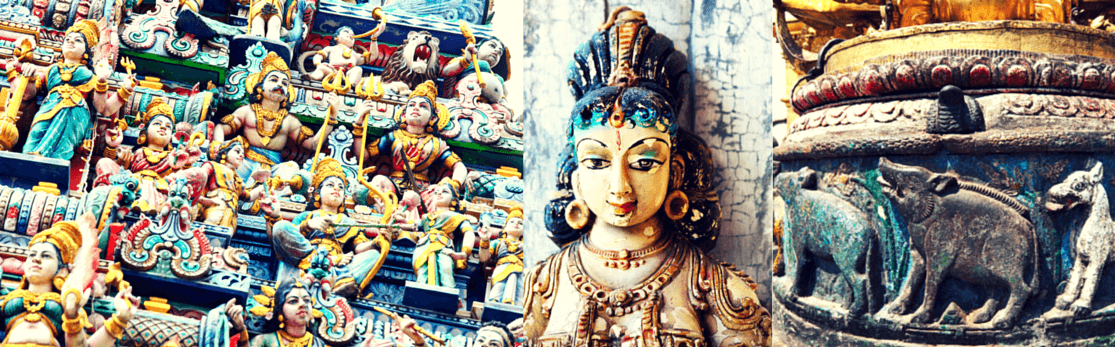
Mythology section banner

The Purushamriga'S Chase

THE PURUSHAMRIGA'S CHASE

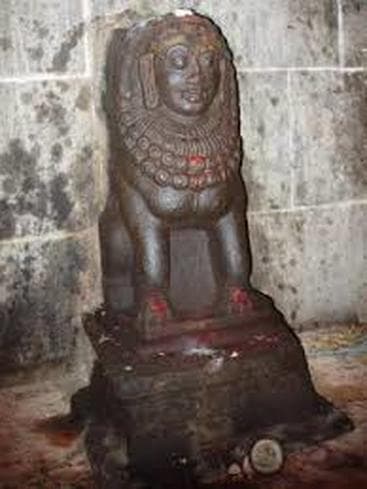
Visitors to temples and palaces in India sometimes notice a fierce, sphinx like stone statue guarding the entrance. The statue, which depicts a rishi with a human face and the body of a lion, is of a mythical creature called the purushamriga. This magical creature is believed to take away the sins of devotees when they enter a temple, and also ward off evil in general. Most people marvel at the purushamriga statue, but not many know that there is a very interesting story in the Mahabharata about this unique creature.

The five Pandava brothers, called the Pancha Pandavas once ruled a mighty kingdom from their capital Indraprastha. One day, Narada a divine saint, visited Indraprastha. The Pandavas received him with honour, and fell at his feet respectfully. After this greeting, Narada suggested to the Pandavas that if they wanted to get the blessings of their ancestors, and ensure the continued prosperity of their kingdom, they should perform an important Vedic ritual called the 'rajasuya yajna.'

After some thought, the Pandavas decided that it would be beneficial if they conducted a rajasuya yajna. However, this ritual was a lengthy and expensive one that required an enormous amount of money. So, the five Pandavas set out in different directions to seek divine support from other kings, and gather wealth. One of the Pandavas, Bhima, went to the North where the kingdom of Kubera, the fabulously wealthy king of the yakshas was situated. Bhima asked Kubera for some money, and Kubera, whose wealth never diminished, magnanimously agreed to donate a large amount of money for the rajasuya yagna. As Bhima was leaving, he noticed the magnificent, divine purushamriga, half man and half lion, strolling around in Kubera's garden. The dignified purushamriga existed only in Kubera's world, so mortal men could not see it. But anyone who had the good fortune to set eyes on it, became deeply pious. Bhima was so impressed by this majestic creature with its thick, flowing mane, that he invited it to attend and guard the rajasuya yagna of the Pandavas. He believed that taking the dignified purushamriga to Indraprastha would enable the Pandavas to perform the great rajasuya yajna with more beneficial results.

"I will come with you," the purushamriga answered. "But only on one condition. You must go ahead of me and direct me, taking care that you always stay in front of me, and do not become an obstacle to my pace and speed. In short, you have to run ahead of me all the time, and not halt even once! If I manage to catch up with you, I will kill you, and eat you up immediately! This is because I am a great devotee of Lord Shiva, and thoughts of my lord are always in my mind. If I find that a person whom I'm following, falls back alongside me, and blocks my way, it will greatly disturb my concentration and meditation."

Now, Bhima was an enormously strong man, and a superb athlete too, so he readily agreed to this unusual condition. He was certain that he could easily out run the stocky, short legged purushamriga. Moreover, Lord Krishna had given Bhima twelve magical shivalings, which, when tossed over Bhima's shoulder, would turn into Shiva temples.

The devout purushamriga worshipped Shiva, and then began to run after Bhima who had already sprinted away after getting a head start. But even though Bhima ran, with all his might, at top speed, he found that the purushamriga gained on him effortlessly. This was because the purushamriga was 'manovega' - as fast as 'manas' or thought - and in spite of Bhima's strength, it caught up with him quickly. When this happened , Bhima tossed one of his magical shivlings over his shoulder. As soon as the stone hit the ground, it was transformed into a lovely Shiva temple with its own pond. When he saw this miracle, the purushamriga, an ardent devotee of Lord Shiva was stopped in his tracks. He took a bath in the holy water of the temple pond, then climbed to its banks, collected flowers from there, and worshipped Lord Shiva. Bhima, in the meanwhile, continued to run furiously, and pushed ahead. But as soon as it finished worshipping Lord Shiva, the purushamriga broke into a run too, and set off in hot pursuit of Bhima again. Within an instant, the purushamriga had closed in on Bhima. When he saw this, a nervous Bhima tossed a second shivling over his shoulder. It too, turned into a Shiva temple, and the purushamriga immediately stopped running and sincerely worshipped his favourite god in the temple as he had done before. But as soon as it finished this ritual, the sphinx like creature dashed after Bhima again. This sequence of events was repeated again and again, till Bhima used up his last, and twelfth shivling. By this time, Bhima was very close to his own capital, Indraprastha. But just as he was sprinting breathlessly across the border of his kingdom, the purushamriga lunged forward with a burst of energy, and grabbed one of Bhima's legs. Then the purushamriga said to Bhima, "Son of the Wind, one of your legs is in your territory, but since I have seized one, it belongs to me!" Then he held Bhima's leg in a vice like grip, so that mighty Bhima was unable to move. When Yudhistira, the eldest Pandava brother who was also called Dharmaraja, the just king, heard the commotion outside his kingdom, he hurried to the spot.

"Oh Dharmaraja, am I doing an injustice? You tell me!" The purushamriga exclaimed, after he had told Yudhistira all that had happened. After thinking about the matter for a while, Dharmaraja declared, "According to your agreement, the foot that is in Indraprastha belongs to Bhima, but the other one, that you are holding, belongs to you." The purushamriga was overcome with emotion when he heard this honest verdict, and he smiled.

"Dharmaraja, your name befits you. You truly are a wise and just king! May you live long! May your reign increase! Bhima does not have to give his leg to me! He made it possible for me to worship Lord Shiva continuously. I only used this argument to test you!" Then the mighty beast praised and prostrated before Lord Krishna, who had arrived in Indraprastha.

"Purushamriga, the Pandavas are performing an important rajasuya. Give them all the help you can so that it is performed auspiciously," Krishna commanded.

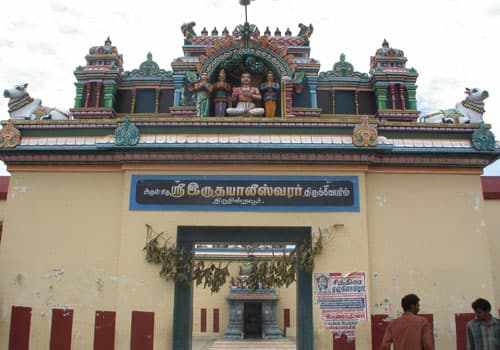
The purushamriga helped the Pandavas right from the time the yagna began, till it was over. After the completion of the rajasuya yagna, the purushamriga told Dharmaraja "my task is over, where I should go now?" Dharmaraja's replied, "Go to Tillai-Chidambaram, where Shiva will soon be coming to perform his cosmic dance, and wait there. Your job is to guard the entrance to the temple, and ward off negative influence." The obedient purushamriga did as he was told, and he can be seen at this spot to this very day, guarding the entrance to his beloved Lord Shiva's temple.

Copyright Santhini Govindan. Please do not reproduce without permission.
Astavakra'S Story

ASTAVAKRA'S STORY

Many centuries ago, there lived a sage called Uddalaka who was so knowledgeable about Hindu scriptures and Vedas that students flocked to his hermitage to learn from him. One such student was a young man named Kahoda who was completely devoted to his teacher. Kahoda pleased Uddalaka so much with his sincerity and dedication, that when Kahoda's studies were over, he got his daughter Sujatha married to him. After their wedding, Kahoda and Sujatha continued to live in Uddalaka's hermitage, and Kahoda helped his father-in-law to teach students.

As time went by, Sujatha became pregnant. She wanted her child to become a learned person, so she would sit near her father daily as he lectured to his students, and listen carefully. Thus, the unborn child in Sujatha's womb heard the Vedas being expounded by a master.

One day, however, Sujatha sat in when Kahoda was teaching the students. Kahoda didn't have the same mastery over the scriptures that Uddalaka had, and he made a mistake while chanting the Vedas. Immediately, the tiny, unborn baby in Sujatha's belly squirmed in distress, and kicked her hard. A surprised Sujatha immediately placed her hand soothingly on her belly. But after sometime, Kahoda made another mistake, and the unborn baby squirmed vigorously again. This went on, again and again, but when Kahoda had made a mistake for the eighth time, Sujatha's unborn baby called out to him angrily from inside his mother's womb. "Father," he cried, "you have made eight mistakes in your recitation today! Let me tell you the words that you have mispronounced..."

Kahoda was shocked and angry when this happened, especially since some of his students began to giggle. "How dare you, an unborn child, insult your father by correcting him, even before you are born?" he shouted, glaring at Sujatha's belly. "You have pointed out eight mistakes I've made. I curse you to be born with eight deformities!" A horrified Sujatha trembled in fear when she heard her husband's cruel words. But after a while, Sujatha calmed herself. Se reassured herself by thinking that Kahoda had merely spoken in anger - she was certain that a child could never be hurt by a curse from its own father.

But alas! When Sujatha gave birth to a baby boy some weeks later, she was filled with despair. The little one had crooked limbs with eight deformities in them. As Sujatha wept bitterly, Uddalaka consoled his daughter. "Don't grieve about your son's external appearance," he advised, "but look at what's inside him. He is an enlightened being."

Though Sujatha refused to accept her father's words initially, she eventually realized how wise they were, and she named her son Ashtavakra (one with eight crooked bends).

As the days passed, Ashtavakra grew up. But every time Kahoda looked at Ashtavakra, he felt enormous guilt. His son was deformed because he had cursed him in a fit of anger, even before he was born. So, when he heard one day, that King Janaka of Mithila was organizing a yagna, he decided that he would attend it too, so that he could earn a little extra money to provide Astavakra with a few more comforts.

Kahoda soon set off to Janaka's court, but when he reached there, he found to his surprise, that no preparations were being made for the yagna. When he questioned Janaka about this, the king said sadly, "A great sage called Bandhi has stipulated that the yagna be started only after he has been defeated in a debate with the other sages participating in the yagna. Bandhi is such a brilliant sage that no one has ever been able to defeat him in an argument. To make matters worse, Bandhi has decreed that anyone defeated by him, has to be drowned to death! Heartless Bandhi has killed so many of my brilliant sages," King Janaka finished mournfully. Kahoda was terrified when he heard this, but he knew that there was no going back. He just had to try and do something special to make amends to his revered teacher Uddalaka, and his precious wife Sujatha for his cruel and thoughtless action. Kahoda agreed to debate with Bandhi.

The debate between Kahoda and Bandhi took place soon after, but sadly; Kahoda just couldn't match Bandhi's razor sharp intelligence. Kahoda was easily defeated in the verbal duel with Bandhi, and he was drowned soon after.

When Sujatha heard about her husband's fate, she was prostrate with grief.

But her wise father consoled her once again. "I think it is best that we never tell Ashtavakra how his father died, for then, he will be filled with a burning desire to avenge his death," Uddalaka advised Sujatha quietly. "So, I'll bring up Ashtavakra as my son, along with your brother Shvetaketu."

Sujatha eventually agreed to this, and Ashtavakra grew to boyhood believing that Uddalaka was his father. Ashtavakra, with his sharp intellect and excellent memory, was a much better student than Shvetaketu. This made Shvetaketu quite jealous, and he resented the fact that Ashtavakra, with his mis-shapen body was his father's favourite. So, one day, when twelve year old Ashtavakra was sitting beside Uddalaka, Shvetaketu hurled himself on his father and shouted at Ashtavakra, "Get away from my father! I won't let you claim him as yours - he is only my father!" Ashtavakra looked at Shvetaketu in utter amazement, but when he saw Uddalaka's and Sujatha's horrified faces, he realized that something was terribly wrong.

He looked straight at Uddalaka and said boldly, "from your expression, I can see that what Shvetaketu says is true. So, if you are not my father, then who are you? And where's my real father?"

Sujatha burst into tears, and as she sobbed, she told Ashtavakra the tragic story of how his own father Kahoda had lost a debate with Bandhi, and been drowned. Ashtavakra listened in silence, and when Sujatha had finished speaking, he said angrily, "So Bandhi took away my father, and caused such suffering in our family. But now, I'll debate with Bandhi! I'm certain that I won't be drowned like my father!" A terrified Sujatha begged Ashtavakra not to take on Bandhi, but Ashtavakra refused, and soon set out for King Janaka's capital Mithila.

When Ashtavakra finally reached Janaka's palace, he struggled to enter it, because of his twisted, misshapen limbs. As he reached the king's throne, he folded his deformed hands respectfully in salutation. When the king and his nobles heard that Ashtavakra had come to engage the great sage Bandhi in an intellectual duel, they burst into loud, uncontrollable laughter. They found the thought of Bandhi being challenged by a young, deformed boy, quite hilarious. Ashtavakra wasn't offended at being laughed at in this insulting way. Instead, he too joined in the raucous laughter. Everyone in the great hall immediately fell silent.

"Why are you laughing, my boy?" King Janaka asked curiously.

"Oh great king, I thought that your learned scholars know the secrets of the scriptures, but now I can see that their eyes cannot see past the bundle of bones and flesh that make the body. I am laughing at all these pretentious men who pretend knowledge of the Vedas, but are only children as far as intellectual maturity is concerned. Tell me dear king; if my body is disfigured, is the soul residing in it deformed too? If a river meanders, is its water misshapen too?"

The king was amazed to hear these words. He immediately agreed to allow Ashtavaktra to debate with Bandhi. Before the debate began, Bandhi repeated his usual condition. Ashtavakra replied that he agreed to it, but stipulated that if Sage Bandhi lost to him, he would have to be drowned too. Those present in King Janaka's court were astonished to hear this condition, but surprisingly, Sage Bandhi readily agreed, and the debate started. The debate ended quickly because wise Ashtavakra defeated Sage Bandhi easily. Then, Ashtavakra revealed his father's name, and insisted that Bandhi be drowned to avenge Kahoda's death.

However, Bandhi then sprang a surprise. He said, "I am the son of Varuna, the god of water. I came to Earth because my father wanted me to get the best sages from here to perform a twelve year yagna. The only way I could get these sages to my father was to challenge them to a debate, and then throw them into the water after defeating them. Now that my father has completed his yagna, let's go to the riverbank, and watch the sages walk out of the river."

As a huge crowd watched, the sages who'd been drowned emerged from the river, one by one. When Kahoda appeared, he embraced his wise son Ashtavakra warmly. Bandhi then asked Ashtavakra to take a dip in the river, with the blessings of his father, Lord Varuna. Ashtavakra did as he was told, and when he emerged from the river, his crooked limbs were perfectly straight and normal, and he was a handsome young man.

King Janaka was so pleased with Ashtavakra's wisdom that he decided to engage in a dialogue with him so that he too could get the benefit of Ashtavakra's knowledge. This dialogue in poetic form forms the masterpiece called the 'Ashtavakra Gita.'

Copyright Santhini Govindan. Please do not reproduce without permission.
Kamban'S Masterpiece

The Ramayana, a great Hindu epic, is a Sanskrit poem of 24,000 verses in seven books, written by the great Sage Valmiki. It tells the story of how Rama, an avatar of Lord Vishnu, rescued his wife Sita, after she was abducted by Ravana, the demon king of Sri Lanka. The Ramayana, considered a monumental literary masterpiece, has had a profound impact on the art, culture, society, and politics of not only the Indian subcontinent, but also parts of South East Asia. The characters and stories in this fascinating epic provide ideals, wisdom, and ethics for daily life. The Ramayana has been widely translated into the major languages of the world, and there are numerous retellings of it in Indian languages. One of the most celebrated versions is the Tamil 'Ramavataram' popularly referred to as 'Kamba Ramayana'. It was written during the Chola era by a brilliant poet called Kamban, and the story of how it came to be written is an interesting tale in itself.

In the 12h century, in the in little village of Therazhundur, in the Tanjavur district of the modern South Indian state of Tamil Nadu, a little boy was born into a family of musicians who played a traditional instrument called the nadaswaram.* This family of musicians worshipped Lord Narasimha, a lion-faced avatar of Lord Vishnu. According to legend, Lord Narasimha emerged from a pillar (kamba) to save his young devotee Prahalad, from his demon father Hiranyakashipu, who hated Lord Vishnu. To honour this divine event, the devout parents named their son Kamban. As Kamban grew up, he proved to be an extremely intelligent boy with a creative bent of mind. His genius was spotted by a wealthy chieftain named Sadaiyappa Vallal, who became Kamban's chief patron, and educated him. Kamban who was a great devotee of Saraswathi, goddess of learning, mastered both the Sankrit and Tamil languages, and he began to compose exquisite poems. King Kulothunga Chola III, king of the ruling Chola dynasty, heard of Kamban's brilliance, and invited him to his court. The Chola kings were great patrons of literature, and Kulothunga was so impressed by Kamban's exceptional literary talent that he made him one of his court poets. Kulothunga was himself a scholarly king, and after he had read Valmiki's Ramayana in Sanskrit, he decided that this masterpiece should be made available in Tamil so that all his subjects could also read and enjoy it.

King Kulothunga also had another famous Tamil poet in his court called Ottakootar. Ottakootar was knowledgeable and erudite, but this scholarly poet's language was very formal and he was a great stickler for following the rules of grammar and syntax. Ottakootar, enormously proud of his own talent, was quite arrogant, and usually adopted a condescending and rather patronizing attitude towards the other court poets. He was especially jealous of Kamban, a creative and instinctive poet who had a powerful imagination and a way with words. King Kulothunga commissioned Kamban and Ottakootar to write the Ramayana in Tamil in their own style. He provided the two poets with adequate funds for this project, but stipulated that it be finished within a given time frame.

Ottakootar, a serious and industrious poet, set to work immediately, copiously composing his verses in scholarly and difficult Tamil. But Kamban, who was carefree and high-spirited didn't think it was necessary to begin working on the project immediately. He procrastinated, and did not so much as put his pen to paper. Ottakootar kept a close watch on his rival's activities, and soon realised that Kamban, was idling away his time. He was rather pleased that his rival was falling far behind in his work, but did not mention it to anyone, and got on determinedly with his work.

One morning, after some time had passed, King Kulothunga summoned both the poets to his palace to find out how much progress they had made on his pet project. Ottakootar arrived at the king's court looking very pleased with himself. He had worked sincerely on his composition of the Ramayan, and was certain that his efforts would win him praise from the king. When Kamban arrived, he too was full of smiles, but inwardly, he was quaking in fear. He had not written a single line of the grand epic that he had promised to compose! He realised that he was in very hot waters indeed. In despair, a frightened Kamban sent up a fervent prayer to his beloved goddess Saraswathi, begging her to forgive his laziness, and help him.

King Koluthunga first asked Ottakootar to report how much of the Ramayana he had already composed, and to read out an excerpt from his work. Ottakootar began proudly, "After Ravana kidnapped Sita, and Lord Rama set out to rescue her, the monkey army (vanaras) volunteered to help Rama in his mission. But they had to cross the sea to reach Lanka, the place where Ravana had spirited Sita away to. The vanaras planned to build a bridge spanning the sea, and they decide to do this by throwing rocks into the sea. I have finished composing my Ramayana verses up to the point where the vanaras are going to hurl rocks into the sea." Then, Ottakootar recited a few exquisite verses from his last canto. He received much applause and praise from the king.

Kamban had listened very attentively when Ottakootar was speaking. When he was called upon him to present his progress report, quick witted Kamban said airily, "Oh, I have completed more of the story than Ottakootar has! In fact, I have come to the part where the vanaras have actually starting throwing rocks into the sea to build a bridge to Lanka." Ottakootar gasped in disbelief when he heard Kamban's words. He was certain that Kamban would not get away with uttering such a blatant lie to the king.

"Let me hear you recite a few lines from your verses," King Kulothunga said.

Kamban closed his eyes, clasped his hands together, prayed to Goddess Saraswathi for inspiration and sang,

"Kumudha the monkey chief,

Dropped a stately hill into the rocky sea.

And the hill, with the rhythmic footwork of a dancer,

Glided over the rocks, and twisted and churned,

Shooting forth a spray of ocean droplets into Heaven.

And the devas of Heaven jumped with joy,

Hoping that the nectar would rise again from the sea.

Ottakootar burned with envy when heard Kamban's brilliant, extempore performance. He said angrily to Kamban, "You have used a wrong word in your poem. Instead of using the word 'thuli' to denote a droplet of water, you have used the word 'thumi'.

"The word 'thumi' is a colloquial expression used by ordinary people in our land," Kamban replied calmly. "Why, I have heard people in a nearby village using it." Ottakootar became even angrier when he heard this.

"Prove it to me!" Ottakootar retorted.

"I am ready to do so right now," Kamban snapped. Then, Kamban and Ottakootar, along with the king, set off to a village nearby. As they walked along, a trembling Kamban prayed to his beloved Goddess Saraswathi again, beseeching her to help him.

As the group walked along, they came across a young milkmaid who was churning milk to get butter. Some children were playing near her pot, and she waved her hands, shooing them away, saying, "Move away from my pot! Otherwise, the drops of curds (thumidham) will splash on you."

This was the proof that Kamban was looking for! Ottakootar was utterly crestfallen when he heard this, but even more shocked, when after uttering these words, the milkmaid suddenly vanished from sight. Ottakottar realized, with a flash of understanding, that the milkmaid was none other than Goddess Saraswathi herself, come to help her faithful devotee Kamban. Ottakottar was completely shaken by this realization, and was filled with despair. Without uttering another word, he turned around, and went straight home. Then, in a fit of sorrow and disappointment, he made a big fire, and started to throw all the verses he had written into its flames.

Kamban had followed Ottakottar as he stalked off, and he when he arrived at his rivals' home, he was horrified to see what Ottakottar was doing. Kamban snatched the last few pages that Ottakottar was getting ready to cast into the fire. They were verses from the last chapter that Ottakottar had written.

"Please don't burn these wonderful verses," Kamban pleaded. "Give them to me! If you permit, I will use them in my Ramayana."

Ottakootar shrugged, and his expression was bleak. "You can do what you like with them," he replied. "I no longer have any interest in them."

Kamban took Ottakootar's verses home, and decided that he would incorporate them in his own work. But he had nothing else written, and with Ottakottar opting out of the competition, he knew that the onus was on him to complete and present the Ramayana in Tamil to the king. He had to write almost ten thousand verses in the two weeks left for the deadline that the king had set! Kamban finally woke up to the fact that he was in a truly desperate situation! Without wasting any more time, he retired to the Tiruvottiyur temple, and after praying to Goddess Saraswathi again, he began to compose his Ramayana, working nonstop throughout the day and night. Legend has it that as Kamban composed his lyrical verses, Lord Ganesha himself acted as his divine scribe, writing down the words. When the sunlight faded, and darkness arrived, Bhagavathy herself appeared with a lamp which she held aloft through the night so that Kamban could continue his work uninterrupted.

Kamban finished his Ramayana in time, and the epic was presented to King Koluthunga and the public at the celebrated Srirangam temple at Tiruchirapalli. Kamban's masterful recitation of the Ramayana held his audience spellbound, and it was hailed as an extraordinary masterpiece. Legend has it that when scholars in the temple objected to Kamban's imaginative retelling of Valmik's story, Kamban replied that he would 'let the Lord be his judge'. People crowding the temple reported that when Kamban uttered these words, the statue of Lord Narasimha shook his mighty head and let out a loud peel of appreciative laughter.

King Koluthunga honoured Kamban with the title of 'Kavi Chakravarthi', or emperor of poets - a truly title he was truly worthy of, because more than eight centuries after his death, his poetry still elicits wonder and delight.

* The nadaswaram is a long, wooden wind instrument crowned by a flaring bell.

Copyright Santhini Govindan. Please do not reproduce without permission.
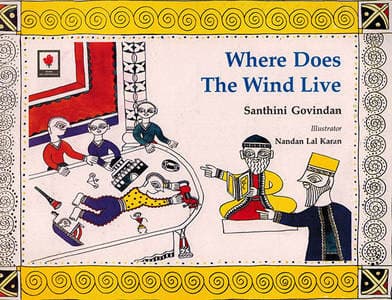
Poosalar'S Temple Of The Heart

POOSALAR'S TEMPLE OF THE HEART

During the 7th century, the South Indian Pallava kingdom was ruled by King Narsimhavarman II, known as Rajasimha. Though Rajasimha was a great soldier and aggressive conqueror, he was also a poet and dramatist who loved art. The king was also a very ardent devotee of Lord Shiva, and his greatest wish was to build a grand temple for his beloved god in his capital city Kanchi, the likes of which the world had never seen before. Rajasimha decided that this temple would be so exquisitely beautiful that it would not only satisfy his spiritual and artistic taste, but would show the world what a mighty king he was. Rajasimha then began to acquire the finest sandstone, and hire the best artists, sculptors and stone cutters to build this fine temple.

Now, it so happened that in the same Pallava kingdom, in the city of Tiruninravur, there lived a pious brahmin named Poosalar who was also a great devotee of Lord Shiva. Poosalar was called thus by the local people because his body was always covered with sacred ash ('poosal' means 'to apply' in Tamil) However, Poosalar was so poor that he did not even have a hut to call home. He lived under a large mahwa tree in the village, and spent most of his day meditating on Lord Shiva. The local people took pity on him, and sometimes left him some scraps of food, and this was what Poosalar survived on. But despite his utter poverty, Poosalar's devotion and love for Lord Shiva only deepened as the days passed. Finally, he too was filled with a burning desire to build a temple for his precious lord in Tiruninravur which did not have a Shiva temple. The more he thought about this idea, the more it appealed to Poosalar. So, he decided to ask the villagers for help to collect funds to build the temple. But alas! When Poosalar spoke about this desire to the people, he was greeted with hoots of derisive laughter. He was ridiculed, and asked rudely how he dared to think about building a temple when he did not have enough money to buy himself a square meal! People only chased Poosalar away, and of course, no one gave him any money.

After this had gone on for several weeks, a disappointed Poosalar had to finally accept that he was never going to be able to gather the money needed to build a temple for Lord Shiva. But Poosalar was not ready to give up something that he so ardently desired. After much thought, he finally came up with a solution - since he had no money, he would build a splendid temple for Lord Shiva with his mind, in his heart!

Once he had decided on this agenda, Poosalar wasted no time - he set to work immediately. First, he carefully read the Agamas or Sanskrit scriptures that laid down the rules about how temples were to be constructed. Then, when he had mastered these rules, he began to collect, in his mind, donations from wealthy people for the temple construction. After this was accomplished, he bought stone, metal, and wood from far and near. With his own bare hands he carried bricks to the temple site - all in his mind. He engaged skillful masons and sculptors, and instructed them through his thoughts about what they were to do. And then, at an auspicious hour, Poosalar mentally dug the land where he wanted the temple to come up, and laid the foundation stone. This continued for weeks, and then months. Poosalar became totally absorbed, and devoted to the building of his temple. He spent the whole day, sitting under the Mahwa tree with his eyes shut, chanting the name of Lord Shiva, and visualizing his temple in the minutest detail. He ate little, and slept even less, as he watched his temple grow stone by stone, layer by layer. Poosalar sat motionless under his tree every day, oblivious to the fact that scornful passersby were staring at him, looking puzzled. Everyone thought that Poosalar had taken leave of his senses. Poosalar mentally fashioned beautiful pillars, and made a gateway, tower, and central shrine. As the temple neared completion, he installed a shimmering gold cube over the main dome. He dug a well and a tank for his temple, and even filled up the chinks in the walls.

In the meanwhile, King Rajasimha's temple was also taking shape. With his untold wealth and resources, the artistic Pallava ruler employed only the finest and most skilled craftsmen, painters, and sculptors in South India to work on his temple. In two short years, they created a glorious shrine of unsurpassed beauty - a stunning example of Pallava architecture that took one's breath away with its magnificence and splendour. The king was full of pride that he had built a temple for Lord Shiva that had no parallel anywhere in the world. Then Rajasimha summoned his court astrologers and asked them to select an auspicious day on which the temple, called the Kailasanatha temple, would be consecrated. A day was chosen, and the king ordered that preparations be made for the ceremonies connected to the sacred consecration.

Poosalar's temple, built in his heart, was also complete by this time, and the poor brahmin also decided to choose an auspicious day to consecrate his temple to Lord Shiva. He chose the same day as the one chosen by King Rajasimha, but of course, he had no idea about this at all. He was busy imploring Lord Shiva to grace the temple he had raised for him with his mind and heart.

When the date of the consecration of Kailasanatha Temple was just a day away, King Rajasimha had a dream in which Lord Shiva appeared to him. The king was ecstatic to see his beloved Lord, and he invited him to come and live in the temple he had built. But Lord Shiva shook his head, and expressed his inability to be present during the consecration of Rajasimha's splendid temple.

"I have to go and be present at the consecration of a temple that another very great devotee, Poosalar, has built for me," he said. Then Lord Shiva told Rajasimha to put off the date of the consecration of his temple for another day. When he awoke, a startled Rajasimha immediately ordered the preparations being made for his temple's consecration to be stopped. There was no question of disregarding his dream - he was a completely faithful devotee of Lord Shiva, ready to do whatever his beloved lord commanded.

Then, the mystified king immediately set out with his entourage to Tiruninravur to find out more about Poosalar and the temple he had built for Lord Shiva. The proud king was a little piqued too - he could not understand how Lord Shiva would prefer to go first to a temple built in an obscure hamlet, choosing it over the massive and exquisitely beautiful Kailasanatha temple that he, a supreme emperor had erected. Rajasimha was also determined to find out how an unknown and humble brahmin's devotion to Lord Shiva was greater than his own.

When the royal party arrived at Tiruninravur, they were surprised to find the common people going about their work as usual. There was no sign that any festivities or celebrations were going on.

"Where is the new Shiva temple in this village located?" the king's nobles asked the villagers. The puzzled villagers replied that no temple had been built, or was coming up in their vicinity.

Then the king asked the villagers if they knew about a great devotee of Lord Shiva called Poosalar. This query raised much laughter, and the people explained that there was one Poosalar in their village, but he was so poor that he was homeless, and lived under a mahwa tree. The people led the king to Poosalar.

When he got there, the king found Poosalar sitting in deep meditation with his eyes shut. He was oblivious to what was going on in the world around him, as he was so busy with the arrangements for the consecration of his temple. The king stood by patiently till Poosalar opened his eyes. Then he introduced himself and said, "I have built a temple for Lord Shiva in Kanchi. But last night, the Lord himself appeared to me in a dream and he told me that he had already decided to attend the consecration of another temple, built by a great devotee called Poosalar. He asked me to put off the consecration of my temple. I have done so, and I came here so that I could meet you, and attend the consecration of your temple..."

When he heard these words, tears of joy filled the poor brahmin's eyes. He told the king truthfully, "I wanted desperately to build a temple for my Lord Shiva, but I am so poor that it was an impossible dream. So, I built the temple, stone by stone, in my heart." The king was so moved when he heard this that he began to weep. Then he placed his ear next to Poosalar's heart, and he heard the sound of cymbals and conches as Lord Shiva was consecrated into Poosalar's Hrudaya - Aalaya (heart-temple). King Rajasimha fell at Pooslar's feet. He recognized that Poosalar's deep devotion and nobility, devoid of any arrogance or pride, had won him the Almighty's recognition. The great king then swore to construct a temple for Poosalar. It would be an exact replica of the one the poor brahmin had built in his mind. King Rjasimha did build this temple. He placed a magnificient Shiva linga in its sanctum sanctorum, along with an idol of Poosalar beside it, and called the Lord Hridayaaleeswara (hridaya + aalaya + eswara) meaning the Lord of the Heart Temple.

This temple, over 1500 years old, still stands in Tiruninravur in Tamilnadu. The inner roof of the shrine is heart-shaped, signifying the conception of the temple in Poosalar's heart. Poosalar's inspiring story is a reminder to us all that no matter what obstacles you face, if you attempt any task with faith and love, and put your whole heart in it, your efforts will be crowned with success!

Copyright Santhini Govindan. Please do not reproduce without permission.
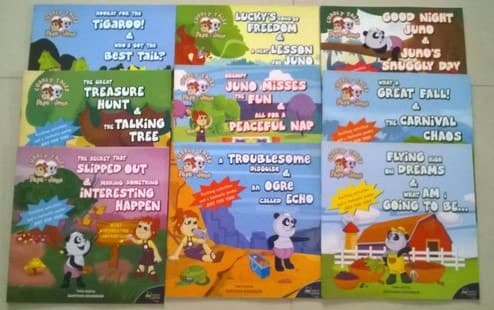
Folk tales

Stories from Chandamama

Folk tales are old stories that originated from the imagination of people of different cultures all over the world. They have been passed on through generations, and with every retelling, as they are changed and enriched, they become more interesting and entertaining.

5 stories available from around the world — India, China, Brazil, Iraq, and beyond. Expand any title to read.

Gond art paintings - folk tales illustration

The Wondrous Coconut Palm

Chandamama

Illustration accompanying the story.

The coconut palm is one of Nature’s marvels. In Sanskrit, it is known as ‘kalpavriksha’, meaning ‘tree that gives all that is necessary for living’. A saying from the South Sea islands says of this tree, ‘he who plants a coconut tree plants food and drink, vessels and clothing, a heat source, habitation for himself, and a heritage for his children’. This is probably why this amazing tree is called ‘nature’s supermarket!’ It’s not surprising therefore, that people from all the lands where the coconut palm grows have woven myths and legends around it from times immemorial.

According to Hindu mythology, this marvellous tree owes its existence to a mighty Suryavanshi king called Trishanku. Thrishanku was a just and generous ruler. One year, when a terrible famine struck his kingdom, the king looked after the family of sage Vishwamitra who was away. When the sage returned, he thanked the king for saving his family from starvation, and told him that he would grant him anything he wished. Now, there was only one thing that Trishanku really desired – it was to enter heaven, not after his death, but in his earthly body. Vishwamitra promised to send the king to heaven, and organised a unique yagna. As the yagna progressed, and Vishwamitra chanted very powerful prayers, Trishanku slowly rose up in the air, till finally, he reached the doors of heaven itself. When the devas saw a mortal man standing at their gates, they were shocked, and rushed to complain to Indra, the king of heaven. When Indra saw Trishanku, he was enraged at the audacity of a mortal king in trying to enter heaven. He angrily gave Trishanku a hard push, and the king tumbled down towards Earth. But as he fell, he called out desperately to Vishwamitra to help him. The sage immediately cast a spell so that Trishanku did not fall back to Earth, and remained suspended in mid-air. But the sage realised that when the spell wore off, Trishanku would come crashing to the ground. So, he placed a long pole beneath him, and as time went on, this pole became the trunk of the coconut tree and Trishanku’s head became the coconut fruit. Trishanku however got his wish to ascend to heaven, as coconuts are offered to the gods in heaven every day!

The English word ‘coconut’ comes from the Spanish and Portuguese word ‘coco’, which means ‘monkey face’. Portuguese explorers who sailed to the islands of the Indian Ocean in the 15th century found a resemblance to a grinning monkey’s face in the three, round, indented markings found at the base of all coconuts, and this name stuck!

The people of Kerala however, have an interesting myth that explains how the coconut tree came to be, and how the coconut got its face. There was once a young fisherman who was unable to catch a single fish. He tried every way he knew, but none of them succeeded. The young man not only became poorer and hungrier, but also became the laughing stock of the village. This filled him with despair, and he decided to learn some magic that would help him to catch fish. So, he went to a famous magician who taught him how to remove his head from his body. Soon the young man started going to the beach late in the evenings when all the other fishermen had returned to their homes with their daily catch. Then he would hide behind some rocks, take his head off from his body, and dive into the water. The fish, amazed at the sight of a headless man floating in the sea, would swarm around him curiously. Some of them would enter the man’s body through his neck. The man would then swim ashore, take the fish out, and replace his head. Then he would proudly go back to his village and show the villagers all the fish that he had caught.

After a few days, the villagers began to wonder how the young man was able to catch so many fish every day without using fishing nets or rods. One day, a curious little boy followed him to the beach and watched as he pulled off his head and dived into the water. The little boy quickly ran forward, picked up the man’s head, and threw it into a bush. When the man came out of the water, he could not find his head. He searched for it frantically, but could not find it. Then, because his magic was running out, he threw himself back into the sea, and became a fish. The curious little boy brought all the villagers to the beach to show them the man’s amazing head. But when they got to the bush where he had thrown the man’s head, they found that it had already grown into a tall and slender palm with nuts on it. Each nut had the man’s face on it. And, that is how the coconut tree was created.

The Chinese name for the coconut, ‘Yue-wang-t’ou’, means the ‘head of the Prince of Yue’. According to a Chinese legend, Prince Lin-Yi was fighting with the prince of Yue. The Prince of Yue was killed, and his head which was hung on a tree, eventually turned into a coconut! The people of Malaysia have their own folk tale to explain the origin of the coconut tree. Long ago, there lived a wise sage who was thousands of years old. One day, a young man came to ask him for a boon. He wished to be useful to the people, he declared, and wanted to serve them all his life! The sage gave the man a magic box, and told him that if he did not open it till he reached home, then his wish would be granted. But alas! The young man could not contain his curiosity. So, he very slowly peeped into the box on the way home. At once he was turned into a tall tree – the coconut tree – for disobeying the sage, but he was granted his wish, for the coconut tree is always very useful to people.

The Yoruba people, an ethnic people in West Africa, have an interesting ‘pataki’ or holy legend that tells the story of Obi, the coconut. According to this legend, Obi was loved and respected by Olofi (God), because he had a pure heart. To reward Obi’s deeds, Olofi made him white and shiny, and gave him a lofty place at the top of the highest palm tree, where everyone could see him. But when Obi realised that he had a much higher place than anyone else, he became vain and conceited. One day, Obi asked Eleggua, one of his closest friends, to invite all his friends to a grand party that he was giving. Eleggua, who had noticed how his friend’s nature had changed, invited all the poorest and shabbiest homeless people he could find to come to Obi’s party. On the day of the party, Obi was shocked and enraged to see dirty, unwashed guests streaming into his home, dressed in rags. He screamed at them and at Eleggua, and chased them all out of his home. A few days later, Olofi disguised himself as a beggar and knocked at Obi’s door. When Obi opened the door and saw a beggar standing there, he lost his temper, shouted at the beggar, and slammed the door in his face. Olofi walked away, but after he had gone ahead a little, he called out to Obi, saying, “Obi, look carefully and see who I really am!” When Obi realised that the beggar was Olofi himself, he trembled in fear and begged Olofi for forgiveness. Olofi forgave him, but said that as a reminder of his arrogance, he was condemned forever. He would always be white and sweet inside, symbolising his previous goodness, but he would always have a hard black cover, to remind him of how he had sinned and become arrogant. Over this cover, he would have another green cover to signify the hope that he could learn from his mistake and become pure and honourable again one day. But he would always fall from the palm tree, and roll in dirt until someone picked him up. And according to the Yoruba legend, poor Obi the coconut is still learning his lesson and waiting hopefully for Olofi to make him white and shiny on the outside again!

Copyright Santhini Govindan. Please do not reproduce without permission.

The Clever Comb Seller

Chandamama

A very long time ago, in a faraway province of China, a wealthy merchant owned a shop that sold combs. He had fine combs made of boxwood, cherry wood, bamboo, and even sandalwood. But though the merchant had a wonderful stock of excellent combs, his sales were not as brisk as he wished. So, he decided that he would hire a good salesman – he wanted to hire a clever man who would bring in lots of new customers. The merchant spread the word round town, and soon, dozens of eager young men queued up outside his shop, hoping to get the job.

The merchant immediately rejected some of the applicants as being unsuitable for his requirements, but even after this, there were still many hopefuls left who were eager to get the job. After some thought, the merchant said, “Since there are so many of you here who seem ideal for the job I’m offering, and I can’t decide whom to hire, I think it’s only fair that we have a competition. Whoever wins the competition will get the job…” “What are the rules of the competition?” one of the applicants asked eagerly. “It’s quite simple! I will give each of you a box of fine boxwood combs. You have to sell them – but only to Buddhist monks. The one who sells the maximum number of combs will be the winner, and will get the job.” After the merchant finished speaking, there was an astounded silence. Then one man asked angrily, “Have you brought us here to make fun of us? Everyone knows that monks have no hair! So how can we be expected to sell combs to them?” “We might as well try to sell water to fish!” another man shouted. A few of the men shook their fists at the merchant and got up and left. Finally, only three young men remained who were willing to take part in the competition. The merchant beamed at them, and handed each one a box full of wooden combs.

After two weeks, the three men returned to the merchant’s shop. “Well? How did you fare?” the merchant asked the first young man. “How many combs did you sell?” The young man had a rather dejected look on his face. “As I thought, it was impossible to sell combs to the bald-headed monks. Some of them scolded me when I approached them as they thought that I was ridiculing them. Most of them just ignored me though. I was just about ready to give up when I noticed one monk scratching his head furiously. He had an itchy scalp. I told him that my wooden comb would be great to scratch his head with. He thought it was a good idea, and he bought a comb!” the young man said triumphantly.

“You have sold only one comb?” the second young man scoffed. “How pathetic! I sold ten combs!” he said proudly. The merchant was surprised to hear this. “You sold ten combs to monks? Don’t tell me you found ten monks with itchy scalps?” “My sales had nothing to do with itchy scalps,” the second young man replied scornfully. “I went to a Buddhist temple set high up on a mountaintop. There are many pilgrims who visit this temple, and I noticed that as they climb up the mountain, the wind tousles their hair. They reach the shrine with their hair in complete disarray. I told one of the monks that it was disrespectful for the pilgrims to come and bow before the deity looking so dishevelled. I suggested that all the pilgrims should comb their hair before entering the shrine. The monk agreed, and then he bought ten combs from me. These combs are going to be lent to those pilgrims who have forgotten to carry a comb with them.” The merchant clapped his hands in delight. “What a splendid idea,” he cried. “I think that you are just the kind of enterprising person I’m looking for.”

As the second young man bowed and nodded happily, the third man stepped forward. “Hey! Not so fast,” he said. “You haven’t heard from me yet…” “Have you sold more than ten combs to monks?” the merchant asked impatiently. “Yes! In fact, I’ve sold a thousand combs!” “A thousand combs? He’s a big liar,” shrieked the first young man. “How can he sell a thousand combs when there are only two hundred combs in the box you gave us?” “He’s right,” replied the merchant. “Please hear me out before you call me names,” the third man said quietly. “I went to one of the best-known temples in this city with my box of combs. I spoke to the head of the monks and told him that I felt blessed, and was deeply thankful to be there. The venerable monk told me graciously that he too was thankful to all the pilgrims for their faith and devotion. Then he remarked that he wished that the monks had a way to show the pilgrims their appreciation. At this, I took out one of the combs from my box. Earlier, I had engraved one of Lord Buddha’s sayings on it, and I told the venerable monk that perhaps they could think of giving each of the pilgrims who visited the temple a similar comb as a blessing. I explained that since a comb was something people used daily, it could serve as a constant reminder for them to do good deeds. He declared it was exactly what he was looking for, so he bought all the two hundred combs I had with me. When I went back to the temple two days later, the venerable monk told me that my combs had been a grand success with the pilgrims. They had all liked them so much that they had given lavish donations to the temple. But since the temple’s original stock of combs was running out, the chief monk wanted to order eight hundred more from me.”

Copyright Santhini Govindan. Please do not reproduce without permission.
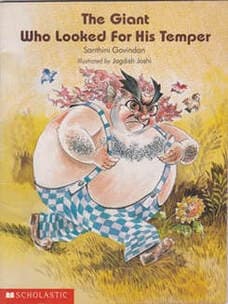
How Night Came to Earth

Chandamama

A tale from Brazil.
A tale from Brazil.

In the beginning, when the world had just been created, there was no night. There was only daylight all the time. The sun shone brightly through all the hours, and never set. So, there was no sunrise and dawn, and no dusk and sunset when shadows began to grow larger on the ground. And of course, since the inky blackness of the night did not cover the earth daily, there were no night birds or bats that flew around in the darkness, no night animals with glowing eyes that hunted at night, and no night flowers that bloomed only under cover of darkness. The moon was not seen glowing in a dark sky with the stars waiting on him, and there were no night sounds made by crickets and other insects.

Then one day, the lovely daughter of the great sea serpent who lived deep down in the depths of the seas, married a son of a race that lived on Earth. He was called Man, and the sea serpent’s daughter left her watery home under the sea, and came to live with her husband on the land above the sea. But alas! Though the beautiful maiden’s husband was kind and loving, she soon became very unhappy because she could not bear the incessant and fierce daylight on Earth. She wilted under the warm, bright light, and her fresh, radiant beauty faded. Her eyes became red and tired. “If only night would come here, I would get a little relief,” the girl moaned sadly. “How I long to rest my eyes in the coolness of the night.” “What is night?” the maiden’s husband asked her curiously. “If you tell me what it is, I will try and get it for you.” The sea serpent’s daughter replied, “Night is the name that we give to the heavy shadows that darken my father’s kingdom in the depths of the ocean, and shut out the light. Though I love the bright sunlight of your Earth, I cannot rest in its glare. I want to close my eyes and sleep in the shadows that I am used to.”

The girl’s husband immediately called three of his trusted slaves, and said, “I’m going to send you on a most important mission. You have to go to the kingdom of the great sea serpent, who lives on the sea bed. Ask him to give you some of the darkness of the night that his daughter so longs for. Hurry back here with night, so that my dear wife can rest in the darkness she so longs for, and not die in our blazing sunlight.” The three slaves immediately set out towards the great sea serpent’s kingdom. After swimming a very long time, they finally reached the sea serpent’s kingdom. When the slaves explained to the sea serpent what they had come for, the great serpent immediately gave them a large bag filled with the dark shadows of the night. “The bag is securely fastened,” the sea serpent warned. “Do not open it until you reach my daughter. Hand it over to her – she will know what to do with it.”

The slaves agreed to this, and set off on the journey back to their home, carrying the large bag that held night. But as the slaves were going along, they heard strange sounds coming from inside the bag. The sounds were made by the animals, birds, and insects of the night, who hooted, screeched, chirped, flapped their wings, and scurried about furiously. The three slaves, who had never heard such weird and mysterious sounds before, were petrified. “Let’s drop this bag and run away,” said the first slave, quaking in fear. “How’s that going to help us?” asked the second slave with a moan. “I’m sure that we are going to die anyway! We should never have agreed to carry this bag…” But the third slave was very curious, and he said boldly, “I want to know what exactly there is inside this bag, and who’s making the terrible sounds that we can hear!” So, the slaves placed the bag on the ground, and opened its seal. Immediately all the night birds and animals and insects in the bag tumbled out, followed by a great, velvety black cloud that was night. As night immediately began to spread over everything in its path, the slaves, more petrified than ever, ran away and escaped into the jungle.

In the meanwhile, the sea serpent’s daughter was waiting anxiously for her husband’s slaves to return with the bag full of night. She was standing under a palm tree at the time when the three slaves unsealed the bag and allowed night to escape. As soon as night escaped, it spread a great, thick cloud of darkness all around, and as the sea serpent’s daughter saw the great cloud descending upon her kingdom, she clapped and rejoiced. Then she took a deep breath, breathed in the cool night air, closed her eyes, and happily went to sleep.

When she woke up, the sea serpent’s daughter felt very refreshed. Her eyes were bright and sparkling once more, and she no longer minded the brightness of day. She looked up at a bright star shining in the sky, and said, “In future, you will be called the morning star, and you will herald the approach of day.” Then the sea serpent’s daughter called all the birds to come around her, and told them to sing their sweetest song to celebrate the arrival of day after night had come to Earth. The cock sang the loudest of all the birds, and the maiden was very pleased with his song. She appointed him watchman of the night, and told him that every day, his loud crowing would inform the world that the ‘madruga’ (dawn) had arrived.

Later in the day, the three disobedient slaves came back home with their empty bag. Their master shouted at them, “Oh, faithless ones! Why did you not obey the sea serpent’s command, and open the bag only in the presence of his daughter? To punish you for your disobedience, I’m going to change you into monkeys, and you will always live among the trees. And your lips will always bear the mark of the sealing wax that sealed the bag that contained night.” In Brazil, night still leaps out quickly upon Earth, in the same way that it did when it leapt out of the bag in which it was sealed. All the night birds and insects and animals still make a noisy sunset chorus in the jungles, and one can still see the mark upon the monkeys’ lips, where they bit off the wax that sealed the bag that imprisoned night.

Copyright Santhini Govindan. Please do not reproduce without permission.

Rice Stories

Chandamama

Myths and legends about rice from cultures around the world.

Rice is the staple food of millions of people on our planet. Yet few of us realise that this commonly used grain, considered sacred in many cultures, has generated more economic activity, and nourished more people over thousands of years, than any other crop. Rice farmers of different lands have customs and rituals which serve as threads to bind them together. They also have fascinating myths that explain the origin of this amazing, life-sustaining grain.

An old tale from India explains that aeons ago, when the Earth was young, Mother Nature’s gifts were different. The trees were taller and stronger, and their fruits were juicier and much sweeter. Flowers were more colourful and fragrant, and even the sky was bluer. Rice was the main food of the people, but it was quite different from the rice we know now. In those glorious days, each grain of rice was very large – in fact, one single grain was enough to fill a man’s belly! The people of those days were such meritorious people that God decided that they should not have to toil for their food. So, when their rice grains ripened, they fell from their stalks, and rolled straight into the granaries where they were stored. One year, when the rice crop was plentiful, a farmer decided that the granaries in their village were too small. “Let’s pull them down and build bigger ones,” he said. So, the old granaries were demolished, and the villagers started building new ones. But alas! As the villagers hurried with the construction, the rice came rolling in from the fields. The farmer was angry because there was nowhere to store the rice. “Couldn’t you wait in the fields till we were ready for you?” he shouted at a grain of rice. “You should not be so impatient and bother us when we are hard at work!” The grain of rice was filled with sorrow when it heard these harsh words. It immediately broke into thousands of pieces. Then it said, “From now on, we will not come to you, but wait in the fields until we are wanted.” From that day onward, rice has been made up of small grains, and the ungrateful people on Earth have to work hard to gather it from their fields and store it in their granaries!

The Indonesian people of Bali believe that rice was a gift from the gods. Their myths say that Lord Vishnu made the Earth give birth to rice, and that God Indra taught the people how to raise it. A legend from ancient China however, tells of rice being a gift from animals. Long ago, China was struck by very severe floods. As the waters covered their homes, the frightened people ran high up into the hills to take refuge. When the floods were over, they came down and found to their sorrow, that all their plants had died. There were no animals left to hunt either, and they faced starvation. One day, some people saw a strange dog running across a field. Around its neck were bundles of stalks with yellow seeds. The people took these seeds from the dog and planted them. They called the plants “rice”, and this grain flourished in their land and grew in plenty. With enough of rice to eat, the people were never hungry ever again. The Chinese people revere the rice grain, and consider it more precious than jewels!

Rice is such an integral part of life in Vietnam that many Vietnamese people say that their country looks like two rice baskets placed at two ends of a pole! These hard-working people have a humorous myth that narrates how rice appeared on Earth. According to the legend, the gods were pleased with Mankind and decreed that humans should not have to work hard to cultivate rice – it was supposed to grow freely and abundantly with little effort. The gods then sent a heavenly spirit as a messenger to Earth, carrying two magic pouches. The first one was full of seeds that would grow as soon as they fell into the soil – they needed no care, and would provide a rich harvest. The second pouch contained seeds that required some effort to cultivate, but when they grew, they would beautify Mother Earth and make her glow. The gods intended for the seeds in the first pouch to become rice and for those in the second pouch to grow into grass. The rice would nourish the people on Earth, while the grass would cover the land, making it green and beautiful.

But alas! The messenger who carried these two precious pouches got muddled up when he was delivering them, and he got the instructions confused too. Rice became very hard to grow, and required much hard labour and attention, while grass sprouted freely. The gods were angry that their carefully thought-out plans had been spoilt by their foolish messenger. They kicked the confused heavenly spirit out of heaven, and sent him to Earth in the form of a beetle who would have to creep around forever in the grass and avoid being stamped on by human beings. Then the gods, eager to try and help the people, ordered the rice grains to make themselves into round balls and roll towards the people so that they could be collected easily for cooking. The rice balls obediently rolled into a house in the first village. The lady of the house was so frightened, however, when she saw the rice balls rolling into her kitchen that she screamed and hurried to fetch her broom. She struck the rice balls with it, and the grains of rice flew in all directions. The rice grains were so angry at being treated thus, that they went back to the fields, swearing that they would never come to humans by themselves. And that’s why, according to the Vietnamese, men and women have to go into the rice fields to this day to cultivate rice.

The people of Thailand worship many goddesses of fertility and good harvests, but Mae Posop, the goddess of grain, is probably the most important. In the beginning, the story goes, rice grew readily without any help from anyone. Each grain of rice was as big as a human fist, was silver-coloured, and had a delicate fragrance. One day, when an ill-tempered woman was husking the rice, she hit the seeds very roughly with a piece of wood. The seed broke into tiny bits, and was scattered over many places. One of these was the place where Mae Posop lived. The goddess was furious when she found out how she had been disrespected, and she prevented rice from growing on Earth for a thousand long years. After this time, the other gods persuaded Mae Posop to allow rice to return to Earth. The goddess agreed, but stipulated that the rice seed would be tiny from then on, and mankind would have to work hard, not only to harvest, but also to cultivate it. She also decreed that respect should be shown not only to the rice grains, but also to Mae Posop herself. Thai farmers observe this ritual to this very day, and offer flowers and other tokens of respect to this beneficent deity.

So, the next time you dip into a plate of steaming hot rice, perhaps you will pause a moment to reflect on the fact that the grain you are eating goes back centuries in time, and has a glorious history and many interesting stories built around it.

Copyright Santhini Govindan. Please do not reproduce without permission.
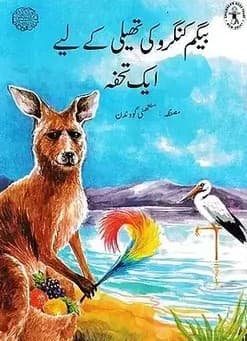
The Clever Cadi

Chandamama

A folktale from Iraq.

Haroun al-Raschid the Caliph (ruler) of an empire in the Far East, was an honourable king who wanted to rule his subjects justly. So, he sometimes slipped out of his palace dressed as a common merchant in order to mingle with his people, and see how things were. One day, disguised thus, he set out mounted on a fine horse. He rode on till he reached the gates of the city of Basara. As he was entering the city, a poor, lame beggar sitting on the roadside called out to him for alms. The Caliph tossed a few coins to the beggar, and was about to ride on, when out of pity, he asked the beggar impulsively, “Do you want to enter the city of Basara?” The beggar nodded eagerly. The Caliph then dismounted, helped the lame man onto his horse, climbed back into the saddle and sat in front of the beggar.

After they entered Basara, the Caliph stopped his horse, and said to the beggar, “We’re in Basara. So, now you can get off my horse.” “Your horse? What do you mean? This horse is mine! Get off yourself!” the beggar retorted. The Caliph could not believe his ears. “Your horse?” he cried in outrage. “Why you miserable fellow! I took pity on you when I saw you sitting lame on the roadside, and that’s why I gave you a ride on my horse.” “That may be true,” the audacious beggar replied smugly. “But here in Basara, no one knows that – we are both strangers to the city. And you can never prove your claim! So, this horse now belongs to me.” The Caliph was speechless with rage. He contemplated tossing the ungrateful beggar into a gutter and riding away, but he knew that a mob would soon gather and chase him for assaulting a poor, weak beggar. “Let’s go to the cadi (judge) of Basara and let him decide this matter,” the Caliph said finally to the beggar. “I’ll abide by his decision.” The Caliph thought that even if he lost his fine horse, it was an opportunity for him to see how the cadi of Basara dispensed justice. The beggar agreed to this, and they made their way to the town hall where the cadi held court.

There were already two men standing before the cadi – an oil merchant, and a porter. The porter was holding up a gleaming gold coin. “This coin is mine,” he proclaimed loudly. “But this lying oil merchant claims that it’s his!” “Your Honour,” said the oil merchant, “that coin is mine. I inherited it, and carried it in my pocket for years, till I lost it today.” “Do you have any witnesses?” asked the cadi. “No, your honour,” replied the oil merchant. “Leave the coin with me, and return tomorrow,” ordered the cadi. The next case was called, and two more men came before the cadi: a writer and a tailor. The writer claimed that the tailor had stolen his precious Book of Learning and was now falsely claiming it as his own. Again, neither man had any witnesses, and the cadi ordered them to leave the book with him and return the following day. Next the cadi called the Caliph and the beggar. The Caliph explained that he had taken pity on the lame beggar and given him a ride, only to have the beggar now falsely claim his horse. The cunning old beggar burst into tears, wept loudly, and said that the horse was his, that he had raised it from a colt, and that they loved each other dearly. “Do you have any witnesses?” the cadi asked calmly. “No, your honour,” replied both the Caliph and the beggar. “Then leave the horse with one of my soldiers for the night, and return to this courtroom tomorrow morning,” the cadi ruled.

The next morning, the Caliph arrived at the courtroom early, because he wanted to hear how the cadi would decide all the cases. When the cadi entered the room, he called the oil merchant and the porter before him. He gave the gold coin to the oil merchant and said, “Take your gold piece and depart.” Then he turned to the porter. “You lied and stole what was not yours,” he said sternly. “So, you will get twenty strokes on your bare feet as punishment!” The writer and the tailor approached the cadi’s desk next. “I find that this Book of Learning belongs to the writer,” the cadi declared. “So, I’m returning it to him. The tailor who utters falsehoods will get thirty lashes with a whip on his palms!” Finally, the Caliph and the beggar were called before the cadi. The cadi addressed the beggar first, “You ungrateful man! You have repaid an act of kindness to you by lying, and attempting to steal! Since you are lame, I’ll not have you beaten, but you must go to jail till you repent and mend your ways.” Then the cadi turned to the Caliph and said, “Take your horse, my good man, and go on your way. May your kindness be better rewarded in the future.”

The Caliph thanked the judge and waited until everyone but the cadi had left the courtroom. Then he approached him and said, “Honoured judge, I greatly admire your wisdom. Without doubt, you must have had divine inspiration! How else could you give such righteous judgments?” The cadi laughed. “There’s no divine inspiration – just commonsense,” he replied. “Didn’t you hear the oil merchant say that he had carried that piece of gold for many years? Last night, I put the coin into a bowl of fresh water. When I saw drops of oil floating on the water this morning, I knew that the merchant had spoken the truth, and the coin really belonged to him.” “Wonderful!” said the Caliph. “But do tell me how you knew to whom the Book of Learning belonged?” “When I looked into the book,” the cadi explained, “I found that the pages that were most frayed and most used were those in which the duties of writers and scholars were written. So I knew that the book surely belonged to the writer.” “Your judgment is most excellent!” exclaimed the Caliph. “But how could you tell to whom my horse belonged?” “Last night, your horse was tied in a stable that you and the beggar would both have to pass on your way to court today. This morning I went to the stable. When the beggar passed, the horse never looked up. But when you passed the open door, he stretched out his head and neighed as horses do only when a loved master approaches. So you see, my friend, the matter was very simple after all.”

“You are a genius, honourable cadi,” cried the Caliph in excitement. “And your wisdom is beyond compare! And now, you can rejoice, because I am the Caliph Haroun Al-Raschid. In appreciation of your wisdom, I appoint you grand cadi of my capital!”

Copyright Santhini Govindan. Please do not reproduce without permission.

Stories on the web

Stories on the Web

Stories and poems by Santhini Govindan available to read on external platforms, download as free PDFs, or listen to as audiobooks.

The Hindu · Young World

Wall of Silence

A two-part story serialised in Young World, the children's supplement of The Hindu newspaper. The story follows a young protagonist navigating friendship, loyalty, and difficult choices.

Free Downloads

Dilly Daisy

A narrative poem illustrated by the author's granddaughter Apsara during a Bangalore workshop when she was ten years old. A lovely collaboration between words and a young artist's imagination.
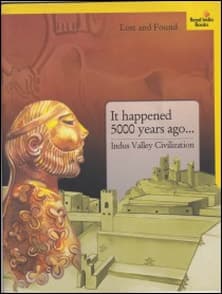
Download PDF(2.7 MB)

When I Meet A Dragon

A collaborative verse story created with the author's granddaughter Apsara when she was seven. A charming, playful adventure written together across two generations.


Download PDF(3.6 MB)

Audiobooks

The Unwelcome Neighbor

The Unwelcome Neighbor

An adaptation of a Panchatantra tale, available as an audiobook on Google Play Store and Kobo.

Google Play Store · Kobo

Just For Elephants

Just For Elephants

An article about the Punnathur Kota elephant sanctuary in Kerala, available as an audiobook online.

Available online